Co-Designing for Trust | University of Washington
Overview.
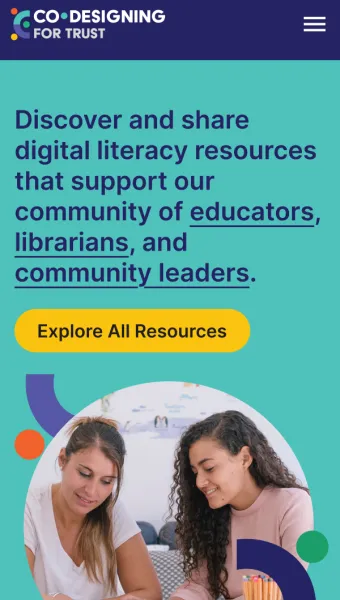
Co-Designing for Trust is a civic engagement initiative born from a research partnership involving the University of Washington and several collaborating organizations. The initiative's mission is to combat misinformation through shared educational resources, community connection, and open collaboration among educators, researchers, and community members.
When the Co-Designing for Trust team approached us, they had a clear vision for what they wanted to build but needed a partner who could help bring it to life. Through a deeply collaborative process, we created a complete visual identity from the ground up, designed and built a custom community-driven platform on Drupal, and delivered a strategic roadmap to guide the initiative's growth over time.
What They Needed.
A Platform Built for Community, Not Just Content
The Co-Designing for Trust team had ambitious goals. They wanted educators, researchers, and community members to come together in one place to share resources, discuss ideas, and build on each other's work. Their existing web presence was a small, static site with a handful of pages. There were no user accounts, no way to upload or share materials, and no interactive features.
What they envisioned was a living, user-driven community where people could create profiles, submit and download educational resources, adapt those resources for their own classrooms, and connect with one another. Think lesson plans, research materials, teaching units, PDFs, and other learning tools that educators could share, remix, and discuss.
A Brand to Match the Mission
The initiative needed a visual identity that reflected the scope and seriousness of its work. During our initial discovery sessions together, the conversation naturally moved toward brand strategy, and the team was energized by the direction it opened up. What started as exploratory exercises quickly became a full brand engagement, giving us the opportunity to build a cohesive identity that could carry the initiative across digital, print, and community-facing materials.
A Way to Manage Big Ambitions Within Real Constraints
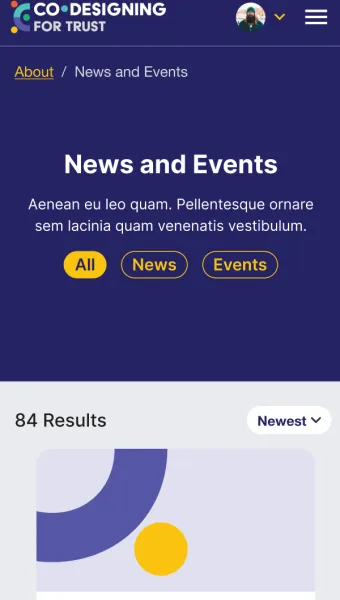
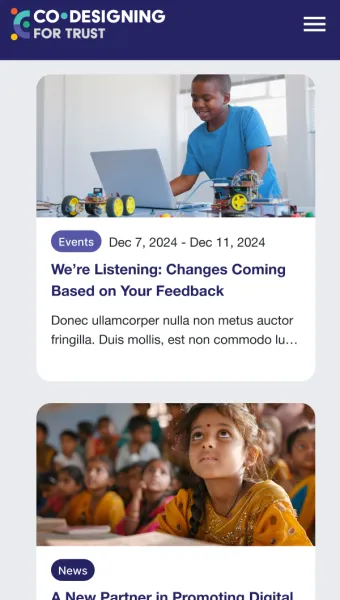
Early conversations about the platform were expansive. The team discussed integrating external co-design tools like Figma, adding event listings and news sections, building in-platform messaging, and enabling moderation features for community forums.
All of this was exciting, and much of it was technically feasible, but delivering everything at once wasn't realistic. They needed a clear path from vision to launch, with a plan for what comes next.
How We Helped.
Building a Brand From the Ground Up
We started with a dedicated brand discovery process. Working closely with the team, we explored the foundational questions that shape any strong brand:
- Purpose, vision, and values
- Target audiences and their expectations
- Brand personality, tone of voice, and story
- SWOT analysis and brand archetypes
- A "the brand is this, not this" exercise to sharpen positioning
These sessions gave both teams a deep, shared understanding of what the initiative stood for and how it wanted to show up in the world.
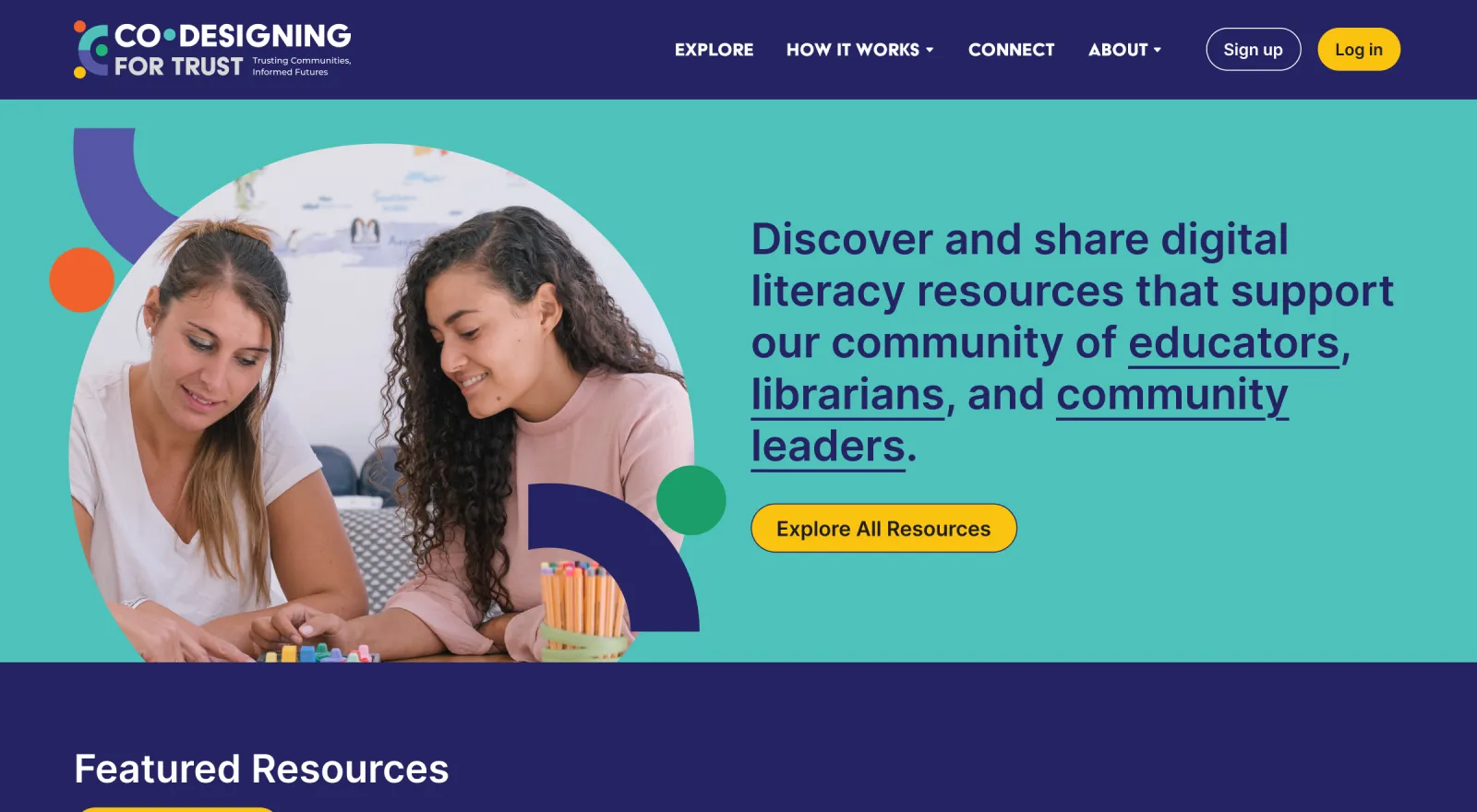
From there, we moved into concept development. Multiple logo directions were explored, each with its own story and color variations. The concept that resonated most centered on co-creation and community connection, visually representing people coming together. The final logo mark was designed to be flexible, with illustrative people elements
that can be rearranged across different materials to represent community, literacy, trust, or other themes depending on the context.
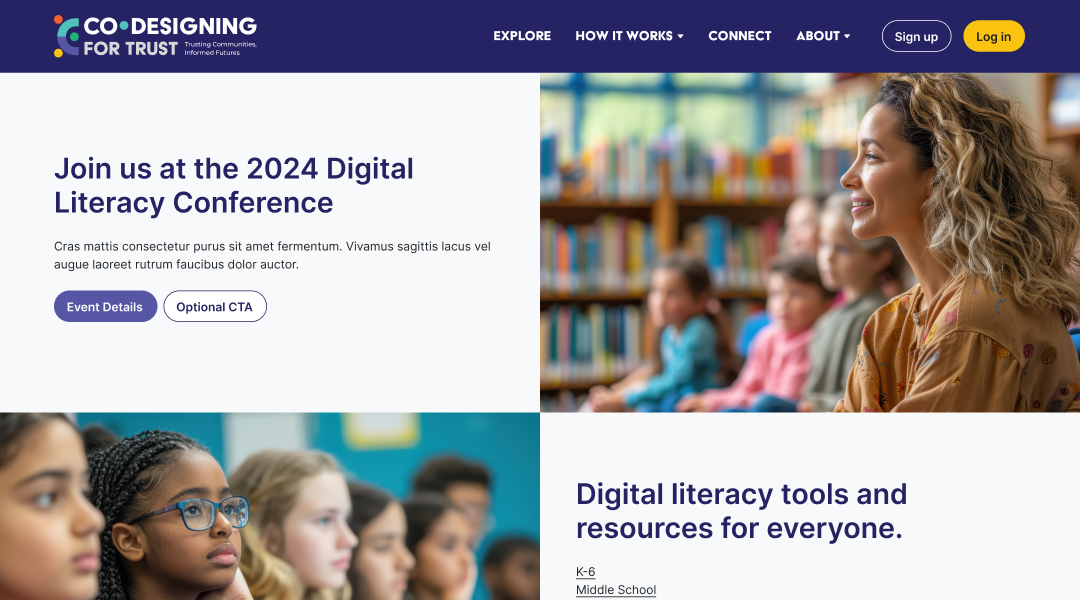
The finished brand guidelines covered everything the team needs to maintain consistency going forward: logo usage, typography, color palettes with accessibility considerations, photography direction, and practical application examples. From a set of early-stage visuals to a professional brand foundation they can build on for years, the transformation was significant.
Designing for Real Users
User interviews conducted during discovery shaped the direction of the entire platform. Educators, researchers, and community members shared their expectations for how the site should work and how they wanted to interact with it. Those conversations surfaced ideas that enriched the original brief, including user profiles, resource adaptations, and peer-to-peer connections.
We took those findings and worked to categorize, prioritize, and determine how each feature could be achieved technically. Wireframes were developed first, then layered with the brand identity to create a cohesive visual experience. Content suggestions and page structures were proposed collaboratively, and the alignment between both teams meant most of those recommendations carried through to the final product without significant changes.
Custom Development for a Community Platform
Building this platform required custom Drupal development that went well beyond standard CMS functionality. The architecture needed to support user accounts, content creation, peer-to-peer interaction, and granular privacy controls, all within a polished frontend experience.
Core platform features include:
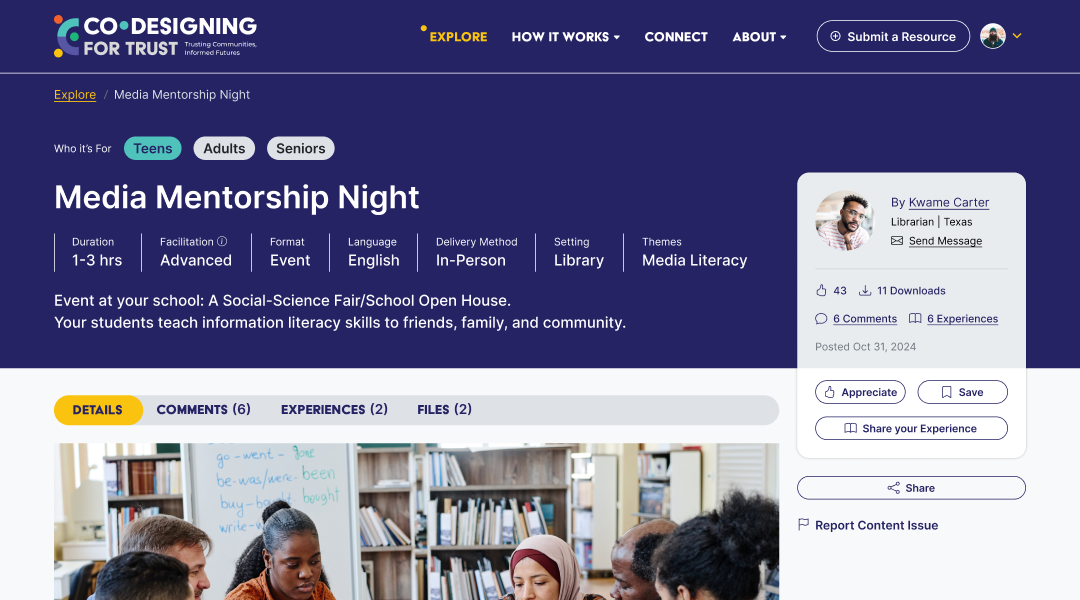
- SSO login via Google with automatic profile syncing
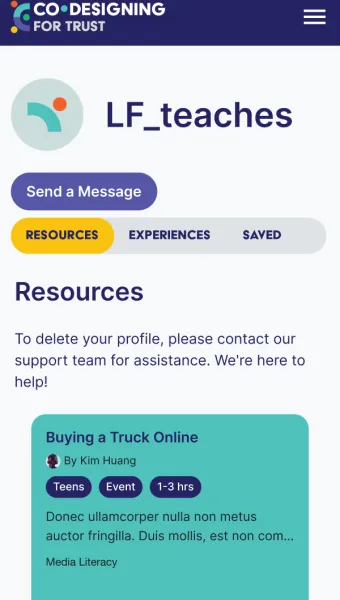
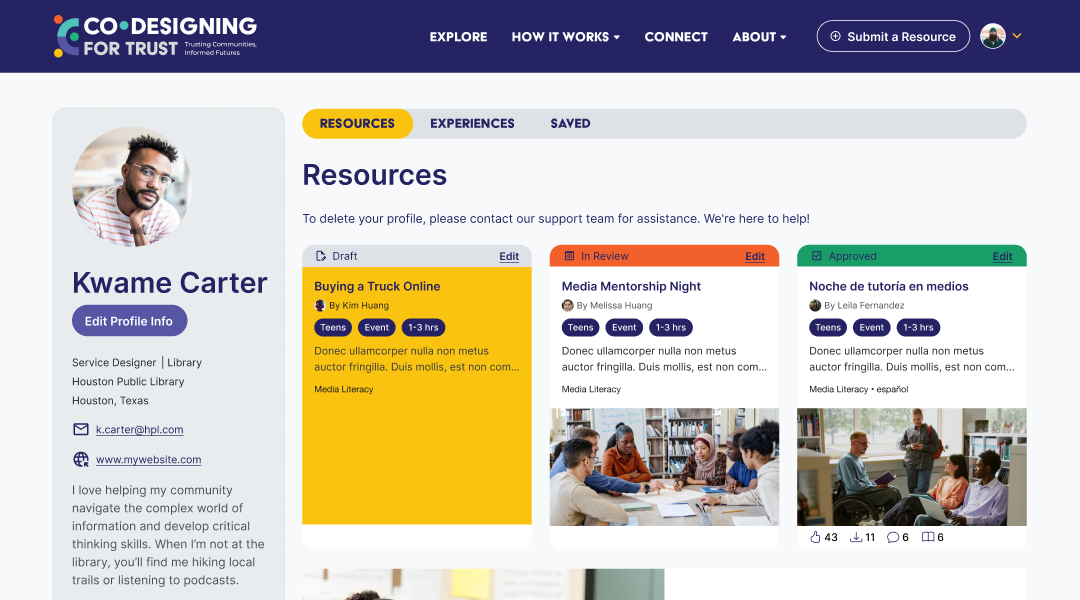
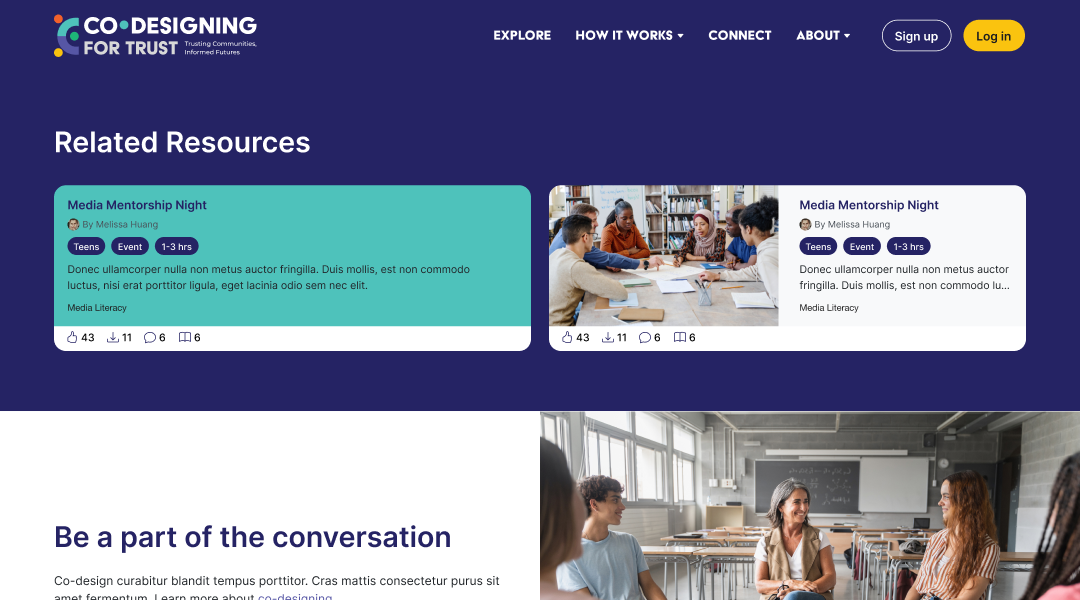
- User profiles with tabs for resources, adaptations, and saved materials
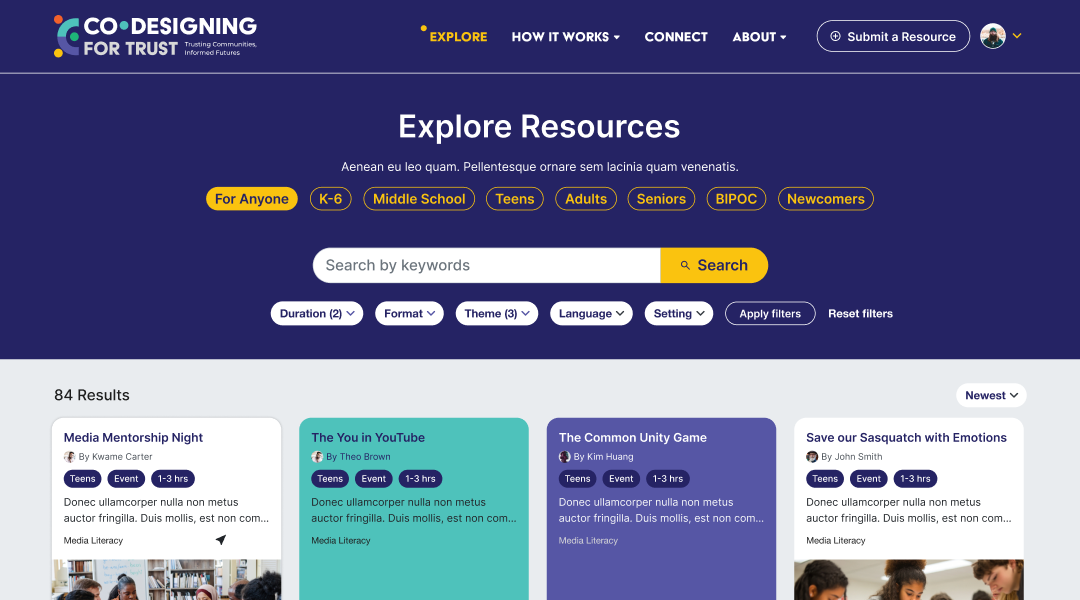
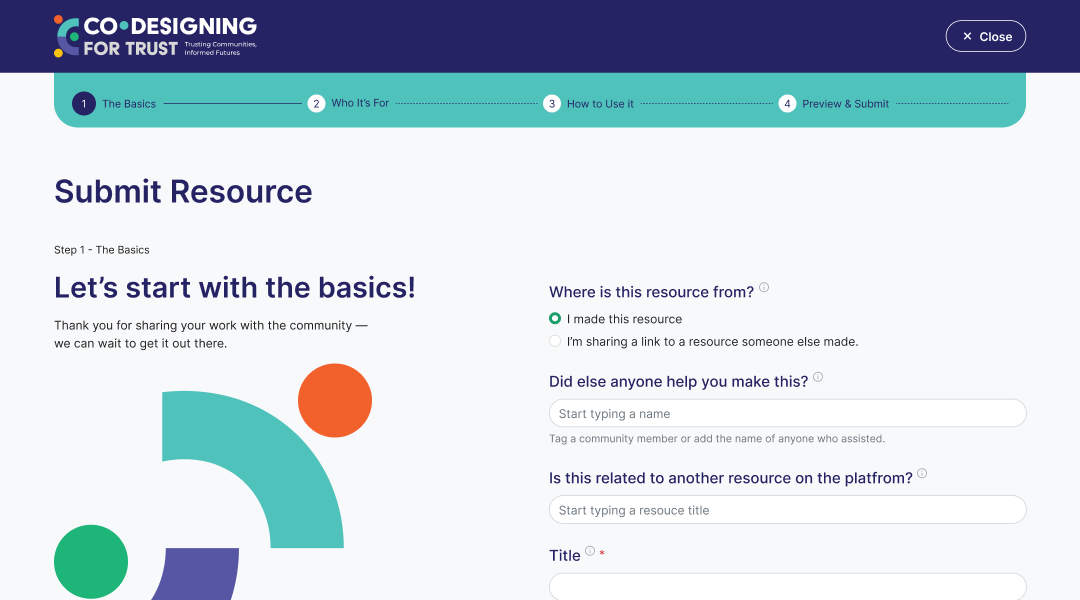
- A custom-themed resource submission workflow with autocomplete fields and drag-and-drop media uploads
- Adaptations that let users remix existing resources and document how they used them in their own classrooms
- Privacy toggles for messaging, co-author tagging, and material sharing
Forum functionality with topics, threads, and resource-level commenting
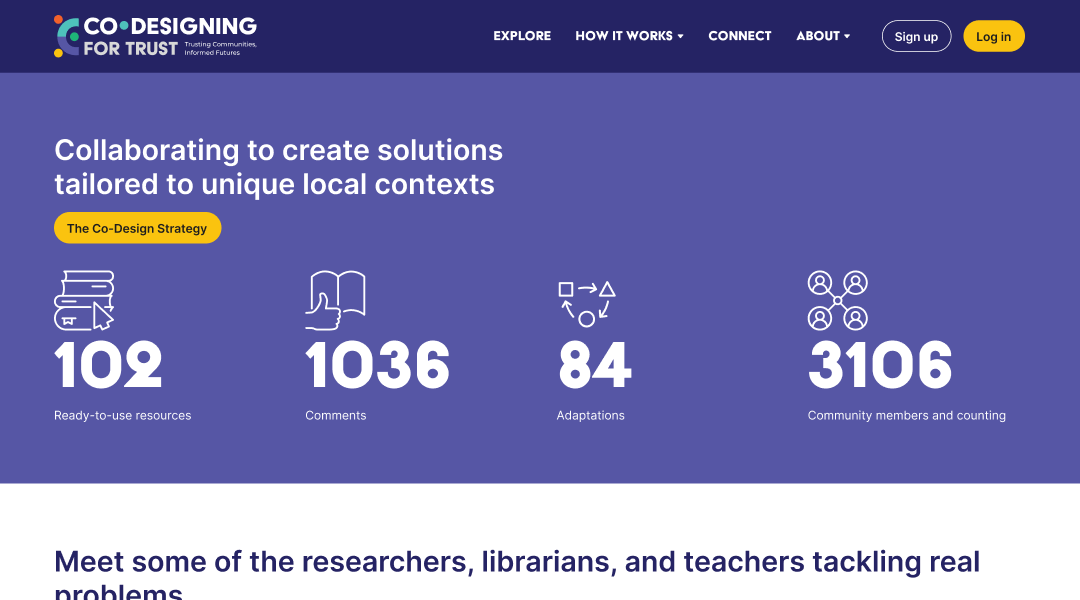
- Public browsing for anonymous visitors, with authentication required to download, comment, or submit.
The resource submission workflow deserves particular attention. Standard Drupal forms were completely redesigned and themed into a clean, intuitive interface so that contributing a resource feels fast and frictionless rather than administrative.
Turning Big Ideas Into a Workable Plan
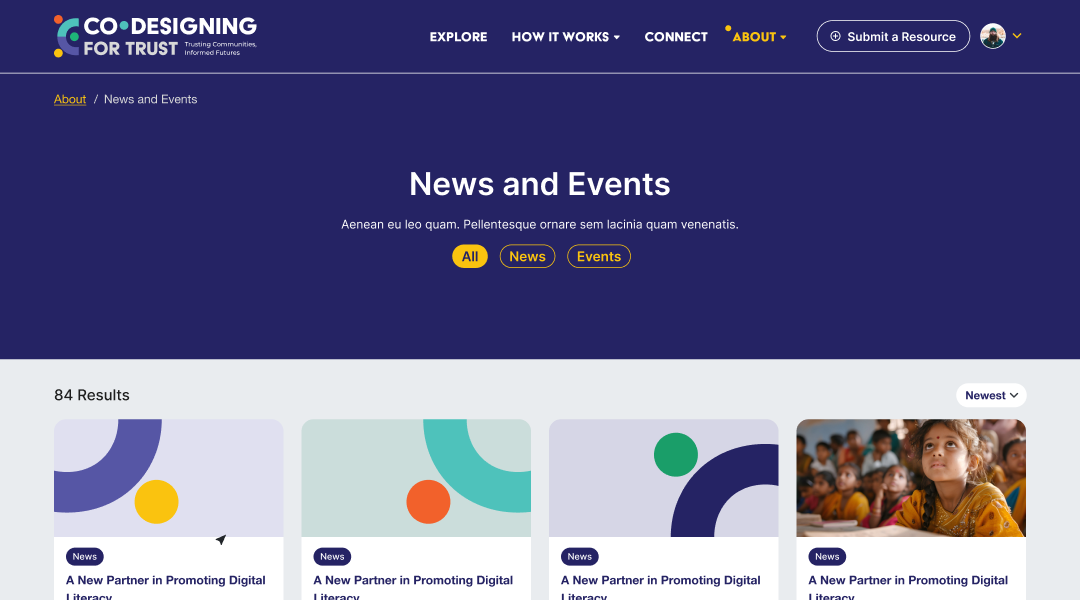
We helped the team prioritize through structured roadmapping sessions. Together, we defined a clear MVP that delivered the core community experience while organizing remaining features into future phases with clear rationale for sequencing. Events, news sections, enhanced moderation, deeper collaboration tools, and more were all mapped out for later iterations. Nothing from the original vision was lost. It was organized into a realistic timeline that the team can act on as the initiative grows.
Words from the client.
Your proven track record in web development, coupled with your robust UX design capabilities, convinced us that you are the ideal partner for this endeavour.
The Results.
A Professional Brand Built for the Long Term
The Co-Designing for Trust team now has a complete, strategic brand identity rooted in the initiative's core values of co-creation and community. The brand guidelines provide everything needed to present a cohesive, professional image across channels, and the flexible visual language is designed to grow and adapt alongside the project.
A Community Platform Ready to Grow
Every piece of core functionality the team needs to launch their community is built and functional:
- User accounts with SSO and automatic profile syncing
- Resource submission with a polished, user-friendly workflow
- Adaptations for remixing and building on shared materials
- Granular privacy controls and user-to-user contact
- Forums and commenting for open discussion
Public browsing with gated access for deeper interaction
The platform is ready for users the moment the team begins driving adoption and building their community.
A Clear Path Forward
The strategic roadmap gives the team a sequenced plan for expanding the platform over time. Phase two and beyond include features like events, news, enhanced moderation, and deeper collaboration tools. The vision is intact and organized into a timeline that can be executed as the initiative evolves.
A Partnership That Made It All Possible
The collaborative dynamic between our team and the Co-Designing for Trust group shaped every aspect of this project. There was a mutual trust from the start that made it easy to share ideas openly, suggest new directions, and build on each other's thinking. That atmosphere of openness is what allowed the project to evolve naturally from a platform build into a comprehensive brand and product engagement, and it produced results that neither team could have reached alone.