Douglas College
Overview.
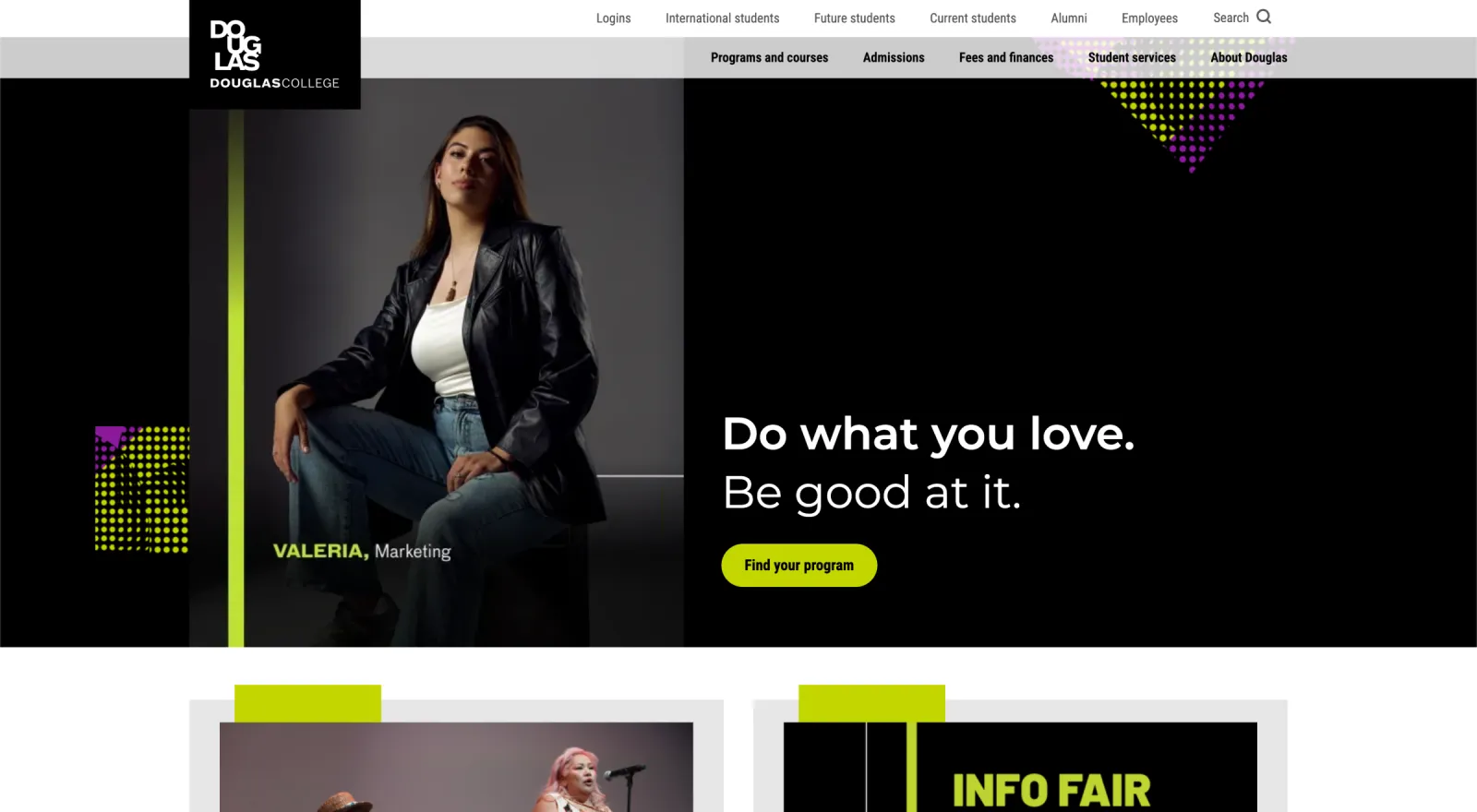
Douglas College is the largest public college in British Columbia, serving students across campuses in New Westminster and Coquitlam along with a wide range of online programs. Years of growth had left its website carrying close to 3,000 pages,not including its programs and courses, maintained by more than 140 content editors across the institution.
Much of what visitors needed sat several layers down, spread across pages that had been named and built independently by each department. They brought in ImageX to audit the site, design a new information architecture, and carry the migration through to a live site without breaking links or pausing the editors who update it every day.
What They Needed.
A Structure Built Around Visitors, Not Departments
Douglas College's site had grown department by department. Each area added the pages it needed, which meant content that mattered to a prospective student could sit deep inside a faculty section, several clicks from where someone would think to look. The navigation appeared relatively simple because so much sat below the surface.
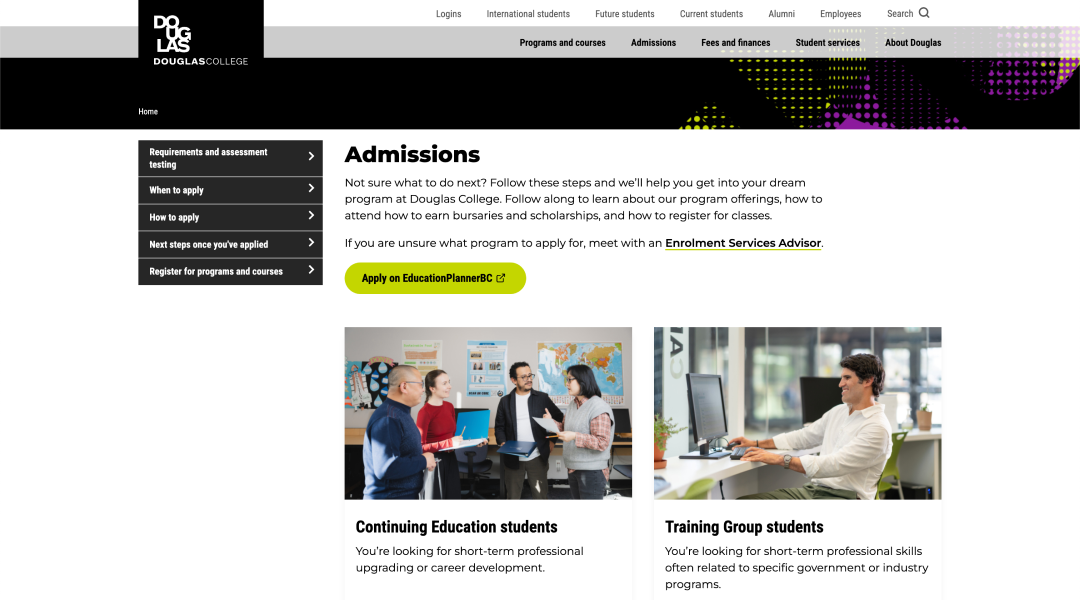
The college wanted a sitemap organized around the people using the site, making the content prospective students needed easier to find and grouping it in ways that reflected how visitors think rather than the institution’s internal structure.
An End to Duplicate and Hard-to-Place Pages
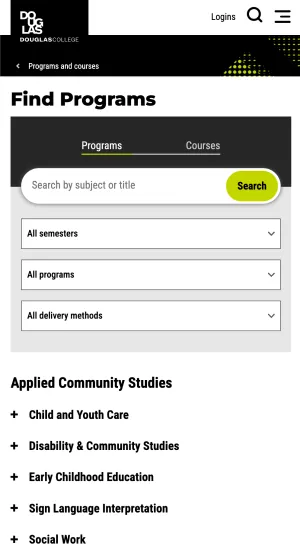
With each department building its own pages, the site had accumulated many that were named almost identically. Search results filled with multiple pages titled "About," one for each faculty and department, with no way for a visitor to tell which one they wanted. Similar topics were scattered across separate pages instead of being pulled together.
Cleaning this up meant retiring the duplicates and giving each topic a single, clear home instead of having it fragmented across several pages.
Governance for More Than 140 Editors
More than 140 content editors work to manage and make edits on the site, with several people in each department making independent decisions about how content was written and structured. That distributed model kept departments self-sufficient, but it also let inconsistencies build up and made the site harder to keep coherent.
The college wanted clearer roles and workflows so the site could stay organized instead of drifting back toward sprawl.
A Migration That Wouldn't Break the Live Site
Moving thousands of pages to new locations carried a hard constraint. The existing URLs had to keep working, so that a bookmarked page or a link inside a document would never land on a 404. And the site couldn't be frozen during the migration. With more than 140 editors continuing to update content, Douglas College needed the new structure to be built while the live site remained active.
Focused Content for Key Audiences
Consolidating the sitemap created room for a set of hub pages the site had never had, aimed at the groups that most often used the site. Because content had been written independently across the institution, the college didn't have consistent, audience-focused copy for the
How We Helped.
Mapping a New Sitemap Through Discovery
The first phase was a discovery project. We ran a comprehensive site audit, including a full crawl that became the baseline for everything that followed. Alongside the audit, our UX team ran user interviews and workshops to understand where visitors were getting stuck and how content was buried.
Those findings shaped a new sitemap, which Douglas College reviewed through its internal committees to confirm it met the needs of departments and visitors alike before any pages moved. The recommendations focused on combining related pages, creating landing pages so content was less fragmented, and lifting deeper content up so more of it could be reached from the menus.
Surfacing Buried Content and Merging Duplicates
With the sitemap approved, we mapped applicable pages to their new destination. Related pages were combined into single, fuller pages, near-duplicate pages were merged or retired, and content that had been sitting several layers down was brought closer to the surface. The result was a site with more links visible on its menus and fewer total pages underneath.
Migrating Thousands of Pages Without Downtime
To move thousands of pages while the site stayed live, we maintained a single site inventory document that tracked every current page and its new destination. As editors created or changed pages on the live site, the inventory was updated to match, keeping it accurate throughout the project.
We then defined the rules for the migration and scripted them, so the move could run as a repeatable process rather than thousands of manual edits. The custom migration script became the backbone of the project, it was able to work through the live inventory document, helping to automate the migration of those pages into the new information architecture, while the development team delivered component enhancements and new features in parallel. This meant that the migration and ongoing improvements moved together rather than holding each other up.
Before touching production, we ran the inventory through the script in a development environment to produce a full copy of the migrated site, tested it for issues, and confirmed it matched the new plan. By the time the migration ran on the live site, the bugs had already been found and fixed.
Keeping Old Links Alive
Every old URL was set to redirect to its new location to ensure that data is still available and content is not causing issues for the user. This means that a visitor with an existing bookmark, or a document which is still pointing at an old address will land on the right page instead of an error. The new structure changed where content lived without breaking the trail back to it.
Cleaning Up SEO and Setting a Baseline
SEO wasn't the centre of the project, but the restructure cleared up some housekeeping along the way. Reducing duplicate page titles meant search results no longer returned a column of identical "About" entries, making it easier for someone to land on the right page from a search.
We also worked with the college to set up a measurement strategy, baselining the site before launch so its progress could be tracked afterward, and consulting on best practices for tools like Google Tag Manager and Google Search Console.
The metrics chosen with the college focused on the structural goals: total page count, page depth, and 404 errors before and after the migration.
Writing Hub Pages for Key Audiences
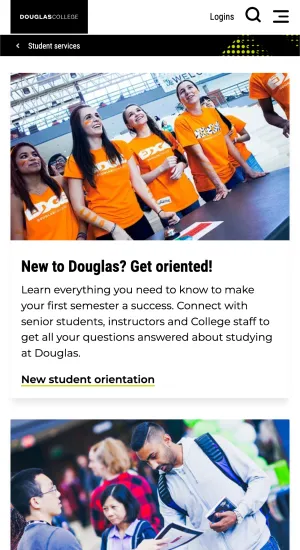
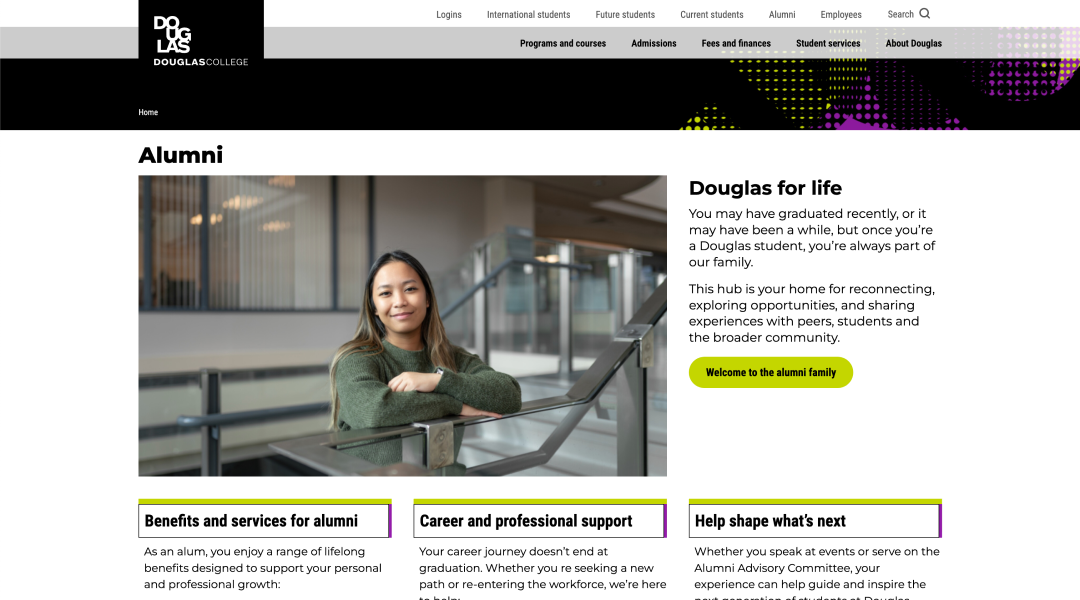
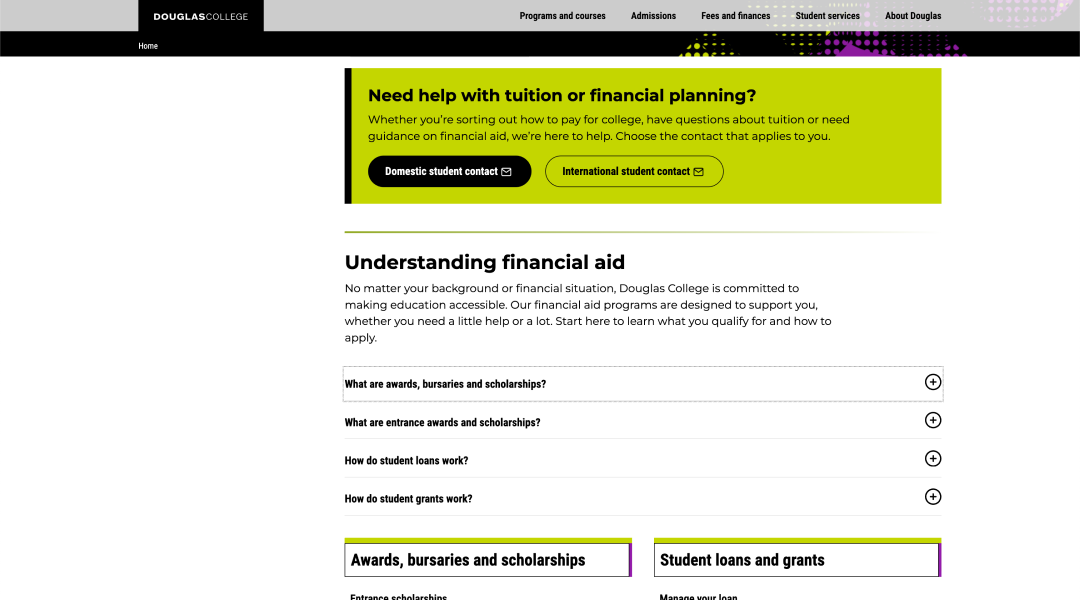
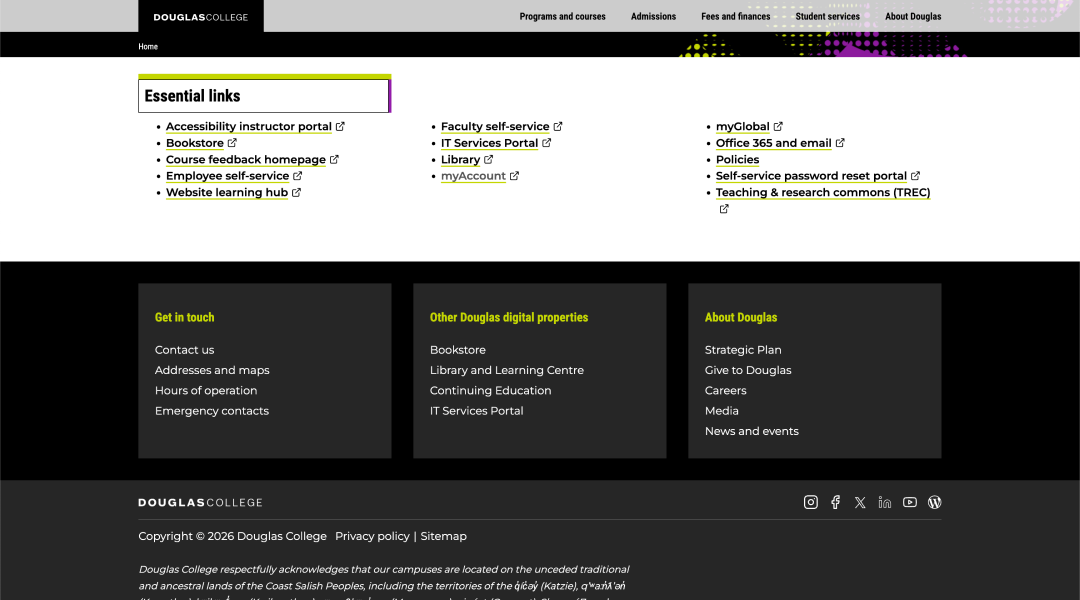
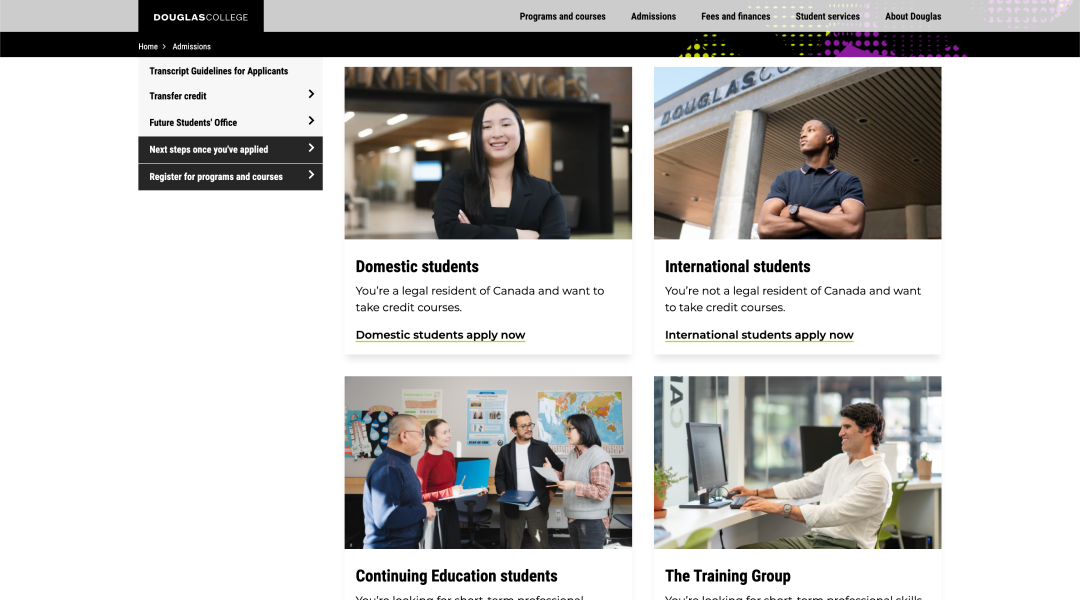
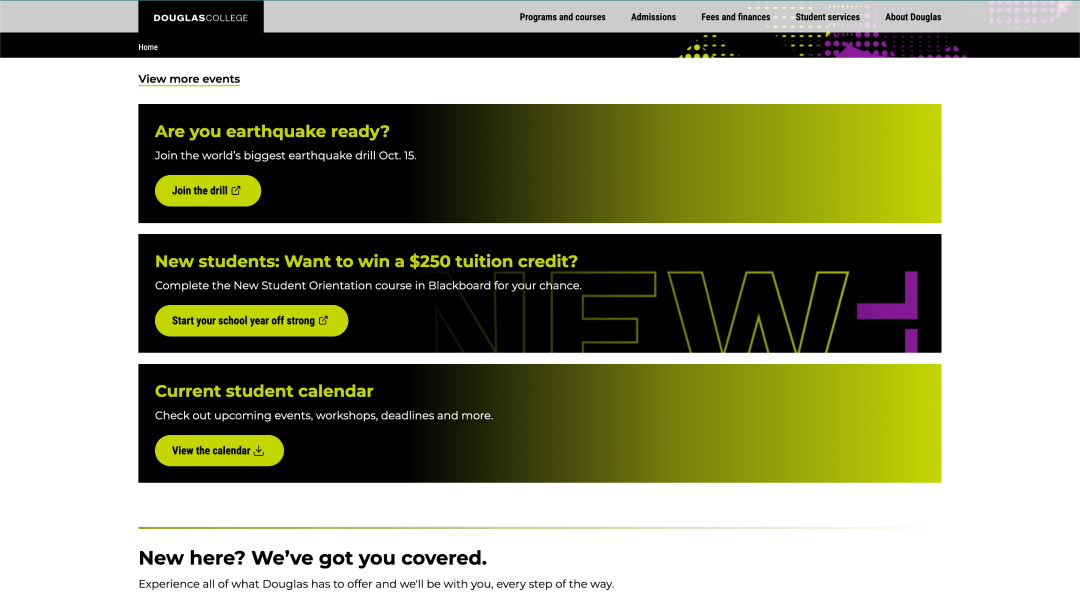
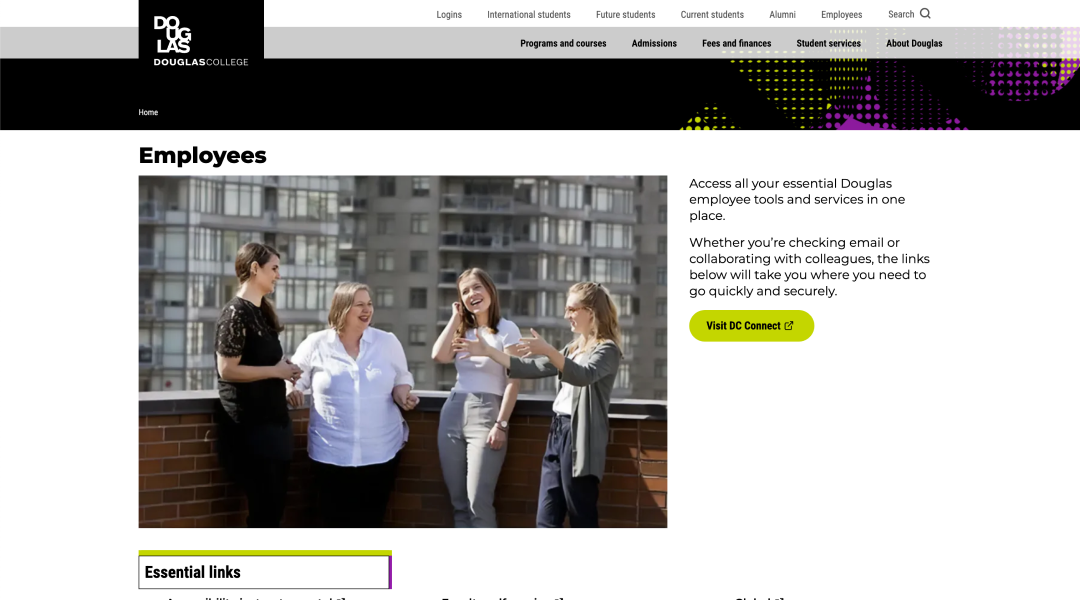
Between the discovery and implementation phases, a separate content project took shape. Douglas College set aside a budget to have us write the new hub pages for its key audiences: international students, future students, current students, alumni, and employees. Much of the site had been weighted toward internal content, so internal-facing material was separated, freeing the main site to focus outward on prospective and current students.
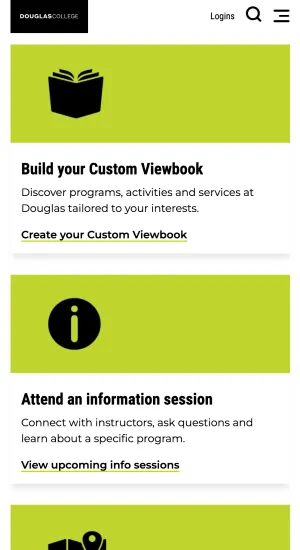
International, future, and current student content that had been split across sections or buried deep was pulled together into focused pages. Rather than simply writing new copy, we worked with the college to design audience-first hub experiences, organizing content into clear journeys and recommending how existing Drupal components could best support them, including some the college owned but wasn't using.
Words from the client.
"ImageX played a key role in aligning the college community around a modern, student-focused website navigation. Through comprehensive consultation with employees and students, they helped develop and deliver a functional website on time and within budget."
Deana Srdic - Manager, Digital Experience
The Results.
A Leaner, Cleaner Site
The migration reduced the overall page count by almost 21%, through merging and retiring, even as more links were brought up into the menus. Content that once sat several layers down is now closer to the surface, and the structure is organized around the people using it rather than department structure that oversee it.
A Foundation for Consistent Governance
Douglas College's digital team has the ability to manage the new hub pages directly to keep the writing consistent, and works with content authors across the institution to create and publish seasonal content and important information. With clearer roles and a structure to follow, the site has a foundation that resists sliding back into sprawl.
Hub Pages That Face Outward
The college now has hub pages built around its key audiences for the first time, pulling together content that used to be scattered. With internal material moved to the employee hub and portals, the main site puts prospective and current students first.
A Strong Baseline for What Comes Next
This phase has established a strong foundation for future measurement. With the new site structure and tracking in place, the college can now monitor progress against key goals, including fewer pages, a shallower site structure, and fewer 404 errors, as the site settles in and performance data builds over time.