
SEM Strategy: How to Plan, Run, and Measure Search Engine Marketing
Paid search puts your organization at the top of the results page the day a campaign goes live, unlike organic search which takes months to build. And it keeps you there for as long as the budget holds.
But the catch is the price of every click. Without a plan, spend flows to searches with no connection to the people you serve.
This guide walks through a full SEM strategy, from how the ad system works to how to measure results, and it closes with the newest change in paid search, ads inside artificial intelligence (AI) chat tools.
- What Is SEM?
- How Does Search Engine Marketing Work?
- Crafting a Winning Search Engine Marketing Strategy
- Maximizing Keyword Research with Top Tools
- How to Use SEM Analytics to Improve Campaigns
- How AI Is Changing Search Engine Marketing
- Next Steps for Your SEM Strategy
What Is SEM?
Search engine marketing (SEM) is paid advertising on search engines like Google and Bing. You choose the searches you want your ads to appear on, set a budget, and pay a fee each time someone clicks through to your site. The ads sit above and beside the organic listings on the search engine results page (SERP), which is the page of links you see after running a search.
It's one of the few channels where your ad reaches a person at the moment they're searching for what you offer. And advertisers keep pouring more money into it. Google's search ads brought in $63.3 billion in the second quarter of 2026, up 17 per cent from a year earlier, while AI summaries spread across Google's results.
How SEM Differs from SEO
Search engine optimization (SEO) is the organic counterpart. SEO earns placement in the unpaid listings through useful content, technical improvements, and links from other credible sites. Rankings built this way take months to develop, and they keep working after you stop investing.
SEM reverses the timeline. Placement begins the day your campaign goes live and ends when the budget does.
The two share research and feed each other. A keyword bringing in conversions through paid ads makes a strong topic for organic content, and a page ranking high in organic results may need no ad spend at all.
SEO builds lasting visibility through content and technical search engine optimization, and SEM buys a spot at the top of the page while those rankings grow.
How Does Search Engine Marketing Work?
Between a person typing a search and an ad receiving a click, three steps happen in sequence.
- The platform matches the query to advertisers' keywords
- Runs an auction for the ad slots
- Charges the winners when their ads get clicked.
Each step has settings you control, so it's worth understanding all three.
The User Query
A campaign starts working when someone types a search matching one of your keywords, the words and phrases you've chosen to bid on. Match types control how close a search needs to be before your ad can show, and Google offers three of them:
- Exact match: Your ad appears on searches carrying the same meaning as your keyword.
- Phrase match: Your ad appears on longer searches including the meaning of your keyword.
Broad match: Your ad appears on related searches, which extends your reach and raises the odds of paying for clicks from people outside your audience.
The Ad Auction
Search pages have a limited number of ad slots, and when demand exceeds them, the platform runs an auction in the milliseconds before the results load.
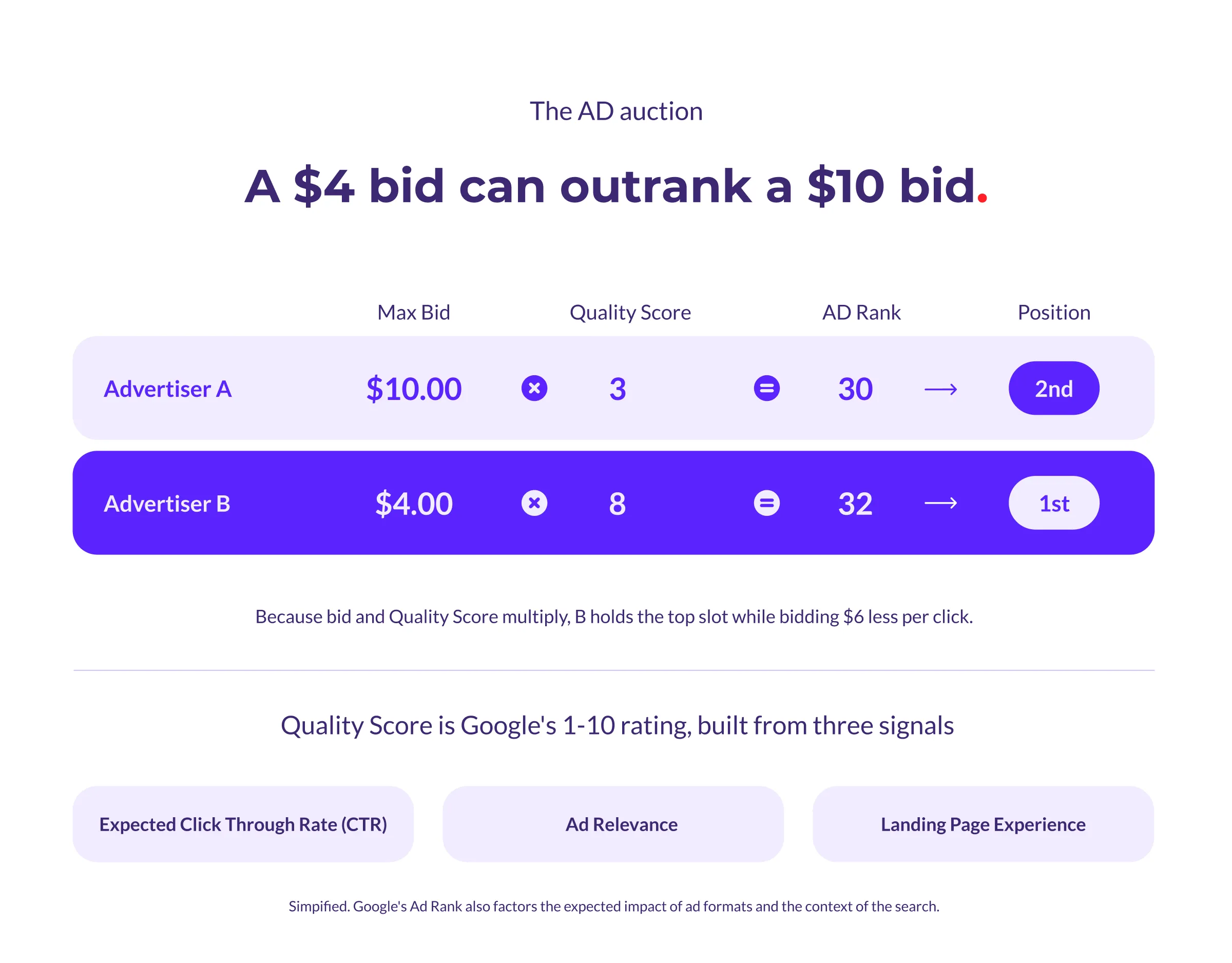
Winning depends on your bid, the maximum you're willing to pay for a click, multiplied by your Quality Score. Quality Score is Google's one-to-ten rating of how useful your ad is for the query, built from expected clickthrough rate, ad relevance, and landing page experience.
Because the two multiply, a relevant ad with a modest bid can outrank a bigger budget behind a sloppy ad. Improving relevance is the cheapest way to move up the page.
Pay-Per-Click Pricing
SEM runs on a pay-per-click (PPC) model. An impression, meaning one appearance of your ad on a results page, costs nothing. The charge lands when someone clicks, and the amount is your cost per click (CPC).
Prices range from under a dollar into the hundreds for competitive legal and insurance terms, since advertisers bid based on what a new customer is worth in their industry.
In practice the final charge can come in under your maximum bid, because the auction charges the minimum needed to hold your position above the next advertiser.
Crafting a Winning Search Engine Marketing Strategy
A budget with no plan behind it buys clicks and nothing else. Building a SEM strategy means deciding what you're trying to achieve, learning where competitors spend, and matching your keywords to what searchers intend.
Set Goals Tied to Business Outcomes
Pick one measurable outcome before touching keywords. A software company might target demo requests under $150 each, and a food bank might target new monthly donors.
The outcome defines what a click is worth to you, which in turn sets your bids, and it gives you a standard for judging the campaign once data comes in. Campaigns launched without a defined outcome drift toward vanity numbers, like clicks and impressions, because those are the numbers the platform surfaces first.
Run a Competitor Analysis
A SEM analysis of your market shows where other organizations spend their ad budgets. The tools covered in the next section reveal the keywords competitors bid on, the copy they run, and the pages they send clicks to.
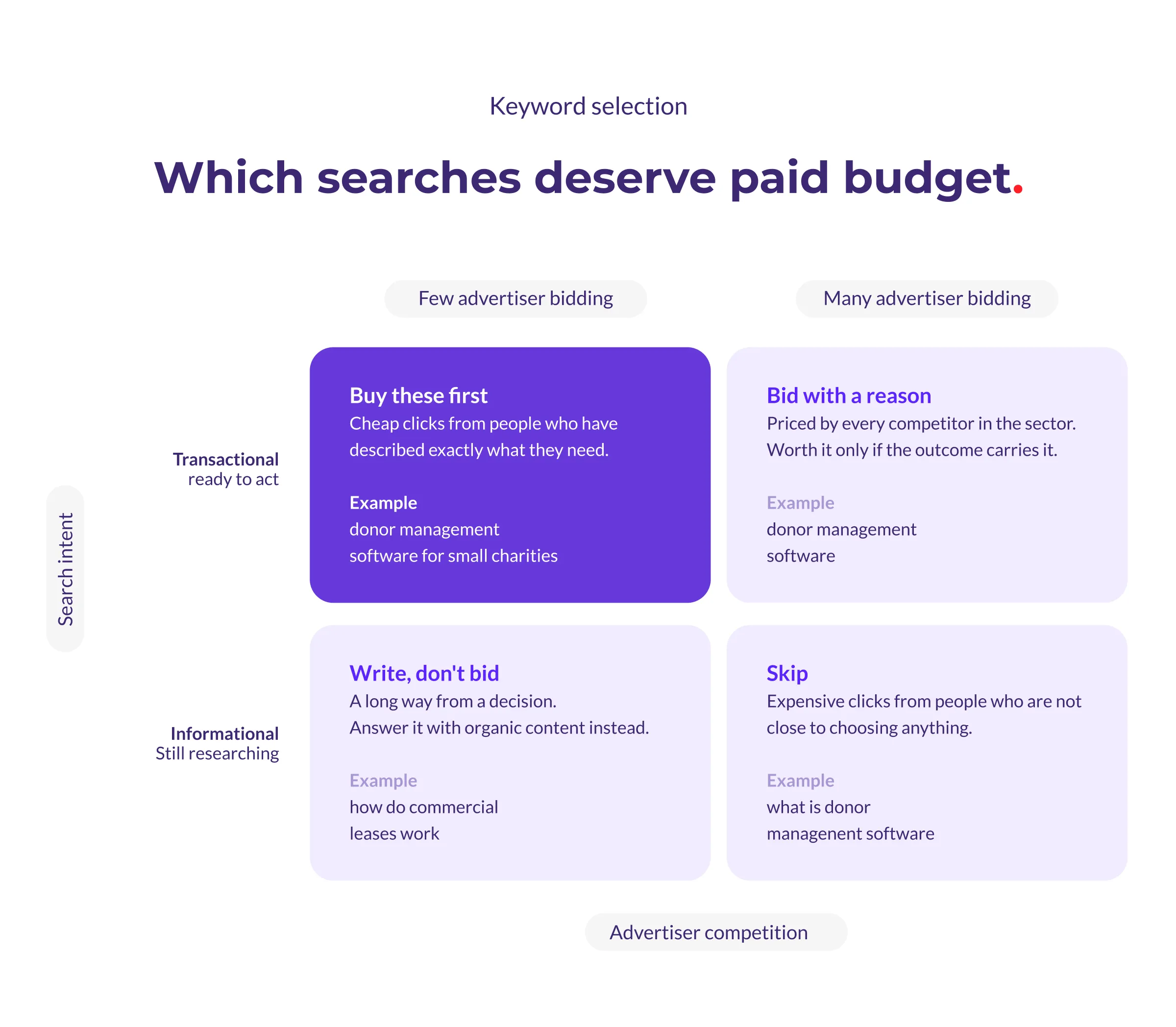
Keywords with several bidders will cost more, and you'll need a clear reason to fight for them. Keywords your competitors skip cost less, and your ad can hold the top spot alone. A local government promoting business grants, for example, may find no one bidding on grant-related searches in its region, which makes those clicks cheap.
Understand Search Intent
Intent is the purpose behind a search, and marketers sort it into three types:
- Informational: The searcher wants an answer or an explanation, like "how do commercial leases work."
- Navigational: The searcher wants a specific site, like a company or program name.
- Transactional: The searcher is ready to act, like "renew business licence online."
Point your paid budget at transactional searches first, because those clicks sit closest to the outcome you chose.
Informational searches are a better fit for organic content, since a person researching a topic has a long way to go before becoming a customer.
Maximizing Keyword Research with Top Tools
Keyword research for SEM answers two questions. What do the people you want to reach type into search engines, and what does each of those clicks cost?
Google Keyword Planner handles both for free inside Google Ads, showing monthly search volumes and the bid ranges advertisers pay. Semrush and Ahrefs are paid platforms showing what other organizations do, including the keywords a competitor bids on, the ad copy they run, and an estimate of their monthly spend.
The discovery process behind an SEO keyword strategy carries over to paid campaigns. The added filter is price, since a keyword can be a perfect topic for a blog post and a terrible buy at $40 a click.
Prioritize Long-Tail Keywords
Long-tail keywords are longer, more specific search phrases with lower search volume. A term like "donor management software" attracts heavy bidding from vendors across the sector. "Donor management software for small charities" draws a fraction of the searches, and the person typing it has described their own situation in detail.
Fewer advertisers compete for phrases like this, so the clicks cost less, and the specificity means the visitor is closer to a decision.
Twenty tight long-tail keywords can produce more conversions than two broad terms at the same budget.
How to Use SEM Analytics to Improve Campaigns
SEM analytics is the practice of reading campaign data and adjusting your ads, keywords, and pages based on what the numbers show. Paid campaigns generate data from the first day, so a weekly review gives you enough signal to fix problems before much budget is gone.
Core SEM Metrics to Track
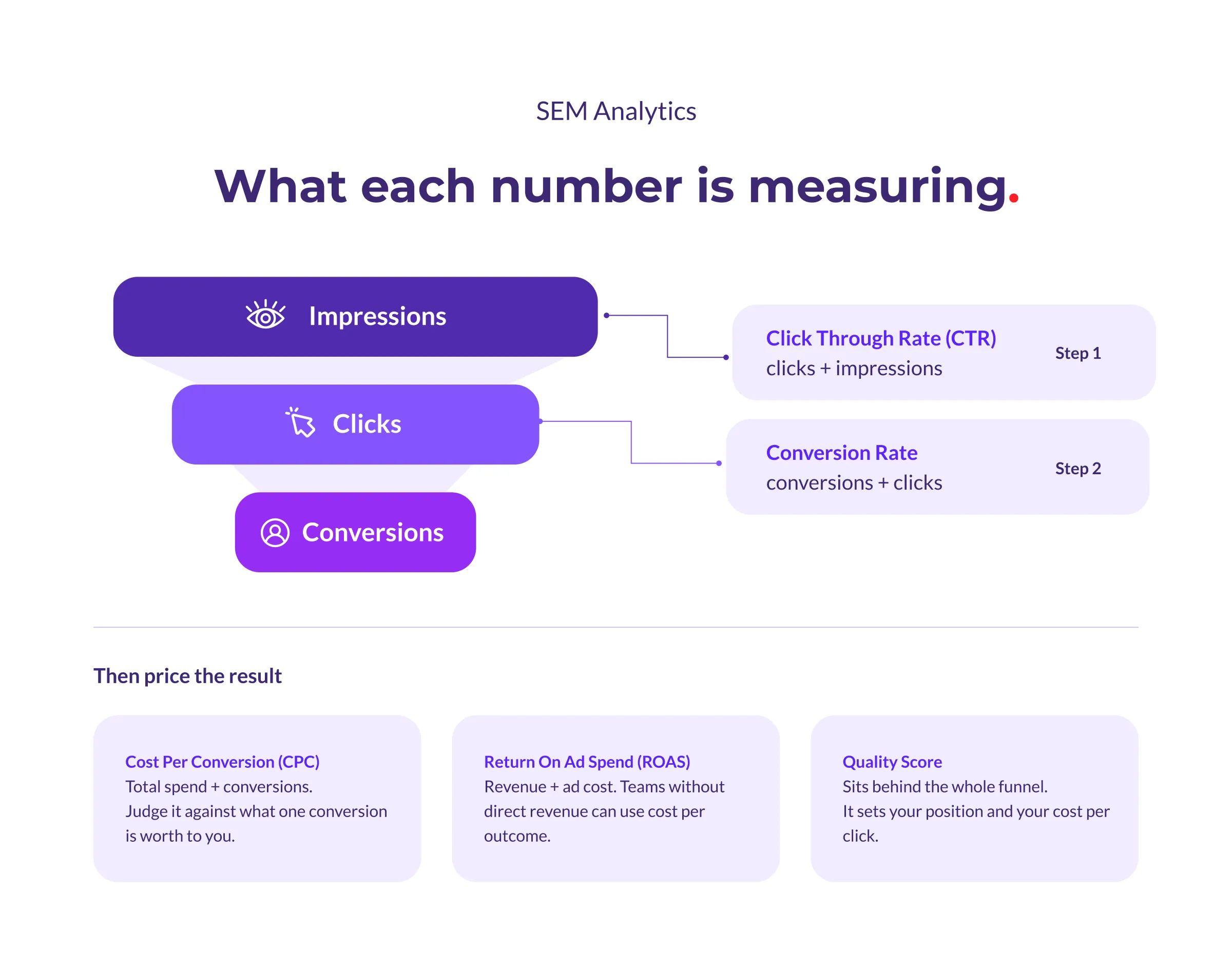
Five numbers give you a working picture of campaign health:
- Clickthrough rate (CTR): The percentage of people who saw your ad and clicked it. A low CTR points to weak ad copy or the wrong keywords.
- Conversion rate: The percentage of clicks finishing the action you chose as your outcome, like a completed inquiry form.
- Cost per conversion: Total spend divided by conversions. Judge it against what a conversion is worth to you.
- Return on ad spend (ROAS): Revenue generated for each dollar of ad cost. A ROAS of four means four dollars back per dollar in. Organizations without direct revenue, like governments and nonprofits, can use cost per outcome in its place.
- Quality Score: Covered earlier. It shapes both your position and your prices, so falling scores deserve attention.
Google Analytics connects these numbers to behaviour on your site, showing what visitors do after the click.
Landing Pages and User Experience
Whether a click turns into a conversion depends on the page receiving it. The page needs to load within a couple of seconds on a phone, since slow pages lose visitors before the content appears. The headline should repeat the promise from the ad, so the visitor gets confirmation they've landed in the right place. And the page should ask for one action, whether filling a form or booking a call.
Google folds landing page experience into Quality Score, so improvements here cut your cost per click at the same time as they raise conversions.
Turning Performance Data into Content Decisions
The search terms report in Google Ads lists the exact queries people typed before clicking your ad.
Reviewing it each month feeds two lists. Queries bringing conversions belong in your ad copy and your organic content plan, because they show the phrasing your audience responds to. Queries spending money without converting become negative keywords, exclusions preventing your ad from appearing on those searches.
Over time the report doubles as audience research, since it surfaces demand you may not have planned content for, like a university seeing steady queries about micro-credentials it hasn't written about.
How AI Is Changing Search Engine Marketing
AI has changed both the search results page and the tools running campaigns behind it. Google adds AI summaries above the results for a wide range of searches, and the summaries change what people click.
A standard result gets clicked within 8% of visits when a summary appears, compared with 15% when one doesn't. Fewer organic clicks raise the value of the visibility you can buy, and they shift part of the competition into the AI features themselves.
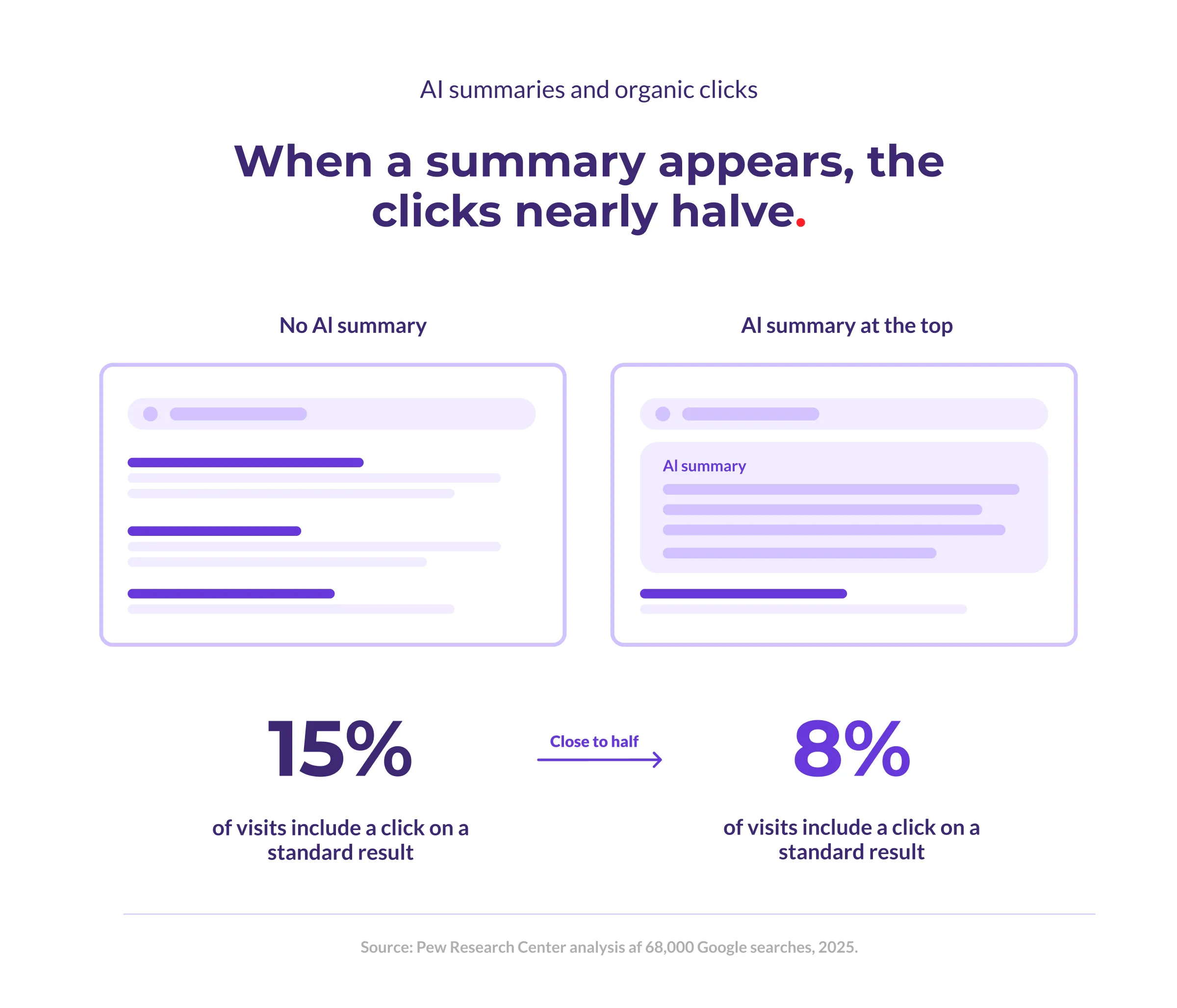
Paid placement covers half of this shift. Brands need visibility in AI search as well, because AI tools answer questions before a website visit happens.
Ads in AI Chat Environments
Ad platforms have followed their audiences into chat interfaces. OpenAI began testing ads in ChatGPT in January 2026, starting with free-tier users in the United States. The ads sit below the answer, carry a label, and stay out of the paid subscription tiers.
Google runs ads in its own AI surfaces as well, which the campaign section below covers. For advertisers this is familiar ground, since chat ads are bought through the same campaign tools used for search.
The question is whether the people you serve are asking chat tools the questions your keywords cover.
Generative AI Asset Creation
Generative AI means software producing new text and images from instructions, and ad platforms have built it into campaign setup.
In Google Ads, responsive search ads take a pool of up to 15 headlines and four descriptions you provide, then assemble different combinations for each search.
Newer tools draft the assets themselves, generating headlines, descriptions, and images from your website and past campaigns. Your role shifts from writing one fixed ad to curating the pool and cutting combinations with weak results.
AI-Driven Bidding and Campaigns
Bid management has moved to AI as well. Smart Bidding adjusts bids for every auction using signals no person can process at auction speed, including device, location, and time of day.
Performance Max extends the approach to entire campaigns. You set a goal, supply creative assets and audience information, and the system runs ads across Google's search, video, and map inventory on its own. Advertisers using these tools see 50 per cent more conversions on search at a similar return on ad spend, by Google's measurement.
Google has begun rolling ads into AI Mode, its chat-style search experience, and reaching them requires AI-driven campaign types like Performance Max. Keyword-level control shrinks as a result, and the levers left to manage are goals, budgets, audiences, and assets.
Next Steps for Your SEM Strategy
Learn how the auction prices your clicks, choose one outcome, build a keyword list filtered by intent and cost, and read the campaign data every week.
Add the AI-driven campaign types once the basics produce steady results, since they perform better with conversion history to learn from.
If you'd like a partner for the analysis and the execution, our digital marketing services cover strategy, SEO, and ongoing optimization.
A good first campaign is a small one. One outcome, a short list of long-tail keywords, and a landing page built for a single action will teach you more about your audience than a broad campaign spending the same money.