Planned Giving Webpages: Crafting Messaging That Resonates
A donor visiting your planned giving page or microsite is often in a state of deep reflection, considering how their life’s work can continue to support a cause they love. This is a highly emotional moment that organizations often meet with the cold, sterile language of tax codes and estate law. When the messaging around planned giving feels like a legal contract rather than an invitation to create a lasting legacy, donor interest can turn into hesitation.
Successful planned giving officers know that the bridge between intent and action is built on clear, accessible, and human-centered communication. Especially online, you need to be intentional about developing messaging that aligns with the donor’s emotional journey to make complex gifts feel achievable and rewarding.
These quick website optimization tips will help you shift your messaging to foster trust and encourage more legacy commitments through your site.
Prioritize simplicity over technical wording.
The average donor doesn’t speak the language of estate planning or tax law. When your planned giving content is filled with dense terminology like “bequests” or “non-probate assets,” it creates a barrier that can lead to decision paralysis.
Your messaging should lower the barrier to entry to your legacy giving program by translating complex concepts into plain English. For instance, focus on rewording complex jargon. You might refer to a bequest as a simple gift in a will that costs nothing today. This approach makes legacy gifts feel accessible to every supporter, regardless of their financial literacy or net worth.
Check out this example from San José State University’s planned giving microsite:
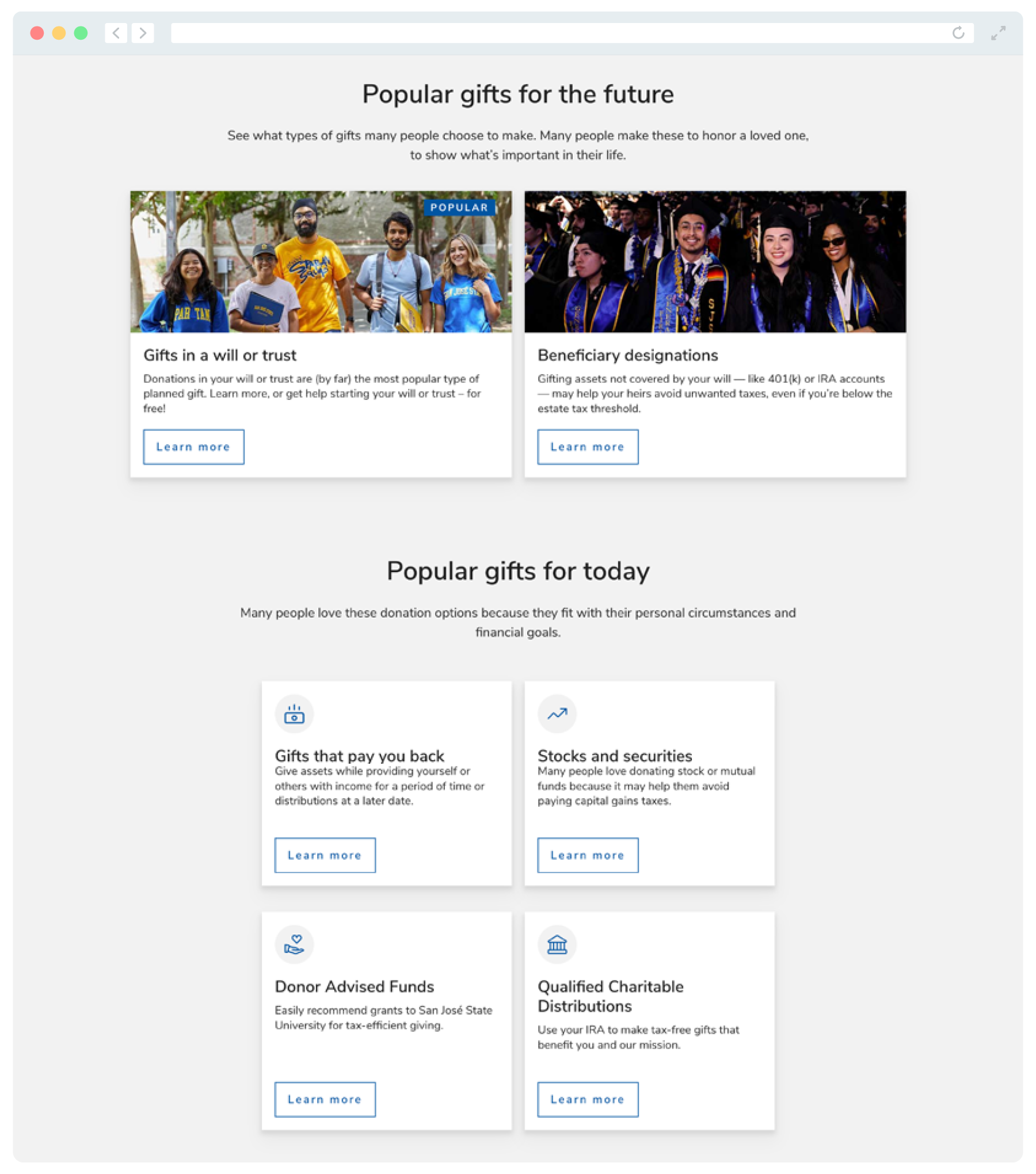
Rather than leading with legal definitions, the page categorizes options under headers such as “popular gifts for the future” and “popular gifts for today.” By using approachable language such as “gifts that pay you back” instead of technical terms like “charitable gift annuities,” the university makes these tax-smart vehicles feel relatable and achievable for a wider audience.
Remember, clear messaging transforms a complex financial decision into a simple act of generosity.
Focus on the donor’s benefits and needs.
The most effective planned giving webpages shift the narrative from the organization’s needs to the donor’s legacy. Donor-centric messaging recognizes that supporters are making a complex life decision that involves their family, their finances, and their future. Your messaging must answer the donor’s unspoken question: “Why is this the right choice for my family and me?”
Highlight the personal benefits of legacy giving to move the conversation from a purely philanthropic act to a strategic life decision. FreeWill’s planned giving guide emphasizes these benefits for donors:
- The ability to leave a lasting mark on a cause and organization they care about, even if they couldn’t give major gifts during their lifetime.
- Decision-making power over how their contribution will be used, such as for specific programs or endowments.
- Significant tax advantages depending on the type of gift they make (e.g., bequests can reduce federal estate taxes for heirs)
- Financial flexibility by enabling different types of assets to be donated
Take a look at an example from charity: water’s planned giving microsite. It summarizes benefits like continuing to use assets during the donor’s lifetime and leaving a lasting legacy through providing clean water to those in need:
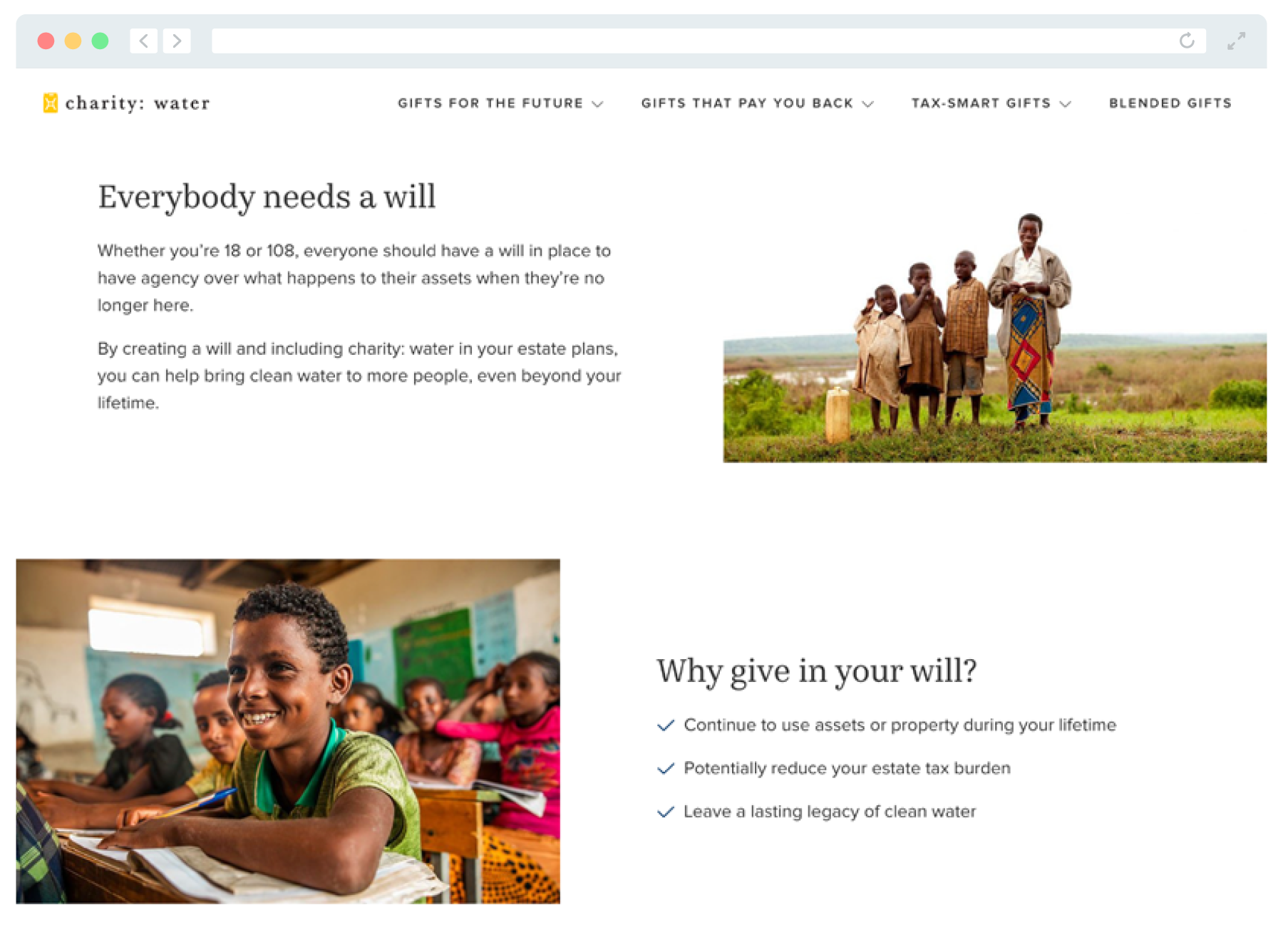
Beyond highlighting benefits, lead with empathy in your messaging. Planned giving is a deeply personal process that involves reflecting on one's life and mortality. The tone of your organization’s website should acknowledge the emotional weight of these decisions. Using a warm and supportive voice positions your organization as a partner in the donor’s legacy journey.
Build trust with social proof.
Donors are more likely to commit to a legacy gift when they see that others have already done so. Social proof acts as a powerful psychological trigger, validating their decision and reducing the perceived risk of a complex gift. By showcasing existing supporters, you normalize legacy giving and build immediate credibility.
Feature testimonials from current legacy society members that focus on the why behind their gift. These stories should be brief and relatable, emphasizing how easy the process was and the peace of mind they felt after finalizing their plans. Hearing from real donors is often more persuasive than reading a technical explanation from your organization.
You can also use social proof statements to create a sense of collective momentum. Phrasing like “More than 500 families have partnered with us to leave a lasting legacy” creates a sense of belonging and momentum. You might also include specific social impact metrics to instill trust, such as:
- Legacy gifts have grown our endowment to $10 million, ensuring that our core community programs will remain fully funded for the next 25 years.
- Gifts in wills currently account for 20% of our annual conservation budget, allowing us to protect 1,000 additional acres of local wildlife habitat every year.
- Bequests from our supporters have funded the education of over 500 first-generation college students through permanent scholarship funds.
As BWF’s donor engagement guide explains, stories and data that demonstrate an organization’s success are the top signal to donors that a charity is trustworthy. Sharing thoughtful data and narratives shifts the perception of legacy giving from an elite activity to a standard way for loyal supporters to join others in showing their long-term commitment.
Align content structure with digital reading habits.
Digital readers typically scan web content for the most relevant information. To ensure your messaging is effective, the physical structure of your webpage must cater to this habit. If a page looks like a wall of text, visitors are likely to leave before ever reaching your call to action.
To create a navigable page, follow these user experience (UX) tips:
- Break up long blocks of text. Limit paragraphs to two to four sentences. You can also use bulleted lists to highlight important points, such as simple steps for including your organization in their will or a checklist of information they need.
- Use clear headers. Headings for specific types of planned gifts help readers understand what the page covers and quickly find the information they need.
- Create low-friction pathways. Your page should guide donors toward a clear next step. Not every donor will be ready to commit, so offer lower-stakes options like downloading a guide on tax-smart giving or a contact form to request more information.
By prioritizing a scannable and intuitive layout, you ensure your most persuasive donor-centric messaging isn’t lost in a sea of text. This strategic alignment between structure and intent transforms your webpage from a simple information hub into a powerful tool for securing long-term support.
Start strengthening your planned giving messaging.
By transforming your planned giving pages from cold technical resources into warm, donor-centric narratives, you create a digital environment where legacy commitments can flourish. Approaching your digital project with a focus on clarity, empathy, and scannability ensures that your supporters feel empowered and excited to secure your organization’s future.
To put these insights into practice, conduct a 15-minute audit of your current planned giving digital content. Open your microsite and evaluate it through the eyes of a first-time supporter. Ask whether there’s too much jargon, a clear list of personal benefits for the donor, motivating social proof, and easy scannability. Once you identify the gaps, prioritize one small messaging update this week to start building a more accessible and empathetic pathway for your future legacy donors.