
The Essential Connection Between Website Design and SEO

Your beautiful new website launches. Marketing celebrates. Leadership loves the aesthetics. Three months later, organic traffic has flatlined.
Or the opposite happens: Your SEO-optimized site ranks well, but visitors leave within seconds because navigation confuses them or pages load too slowly.
A lot of organizations treat design and SEO as competing priorities. Design teams advocate for aesthetics and user experience. SEO teams push for technical functionality and search visibility. Both camps believe they're right, and both end up compromising.
This creates a false choice. The best websites prove you don't sacrifice design for SEO or reverse the equation. When done right, strategic design decisions naturally support search visibility while creating experiences users enjoy.
What Is SEO-Friendly Website Design?
SEO-friendly website design means building sites where every design decision supports both search visibility and user experience. This differs from the common approach where organizations build a beautiful site, then hire someone to "add SEO" afterward, or create an SEO-optimized site that feels clinical and uninspiring.
Strategic design serves both purposes simultaneously because both design and SEO ultimately serve the same master: the user.
The cost of getting this wrong compounds quickly:
- Beautiful site nobody finds = wasted investment in design and content
- Findable site users immediately abandon = wasted traffic your SEO work generates
- Treating design and SEO as separate work streams = paying twice to fix preventable problems
Great SEO website design starts with planning both disciplines from day one. Design decisions get informed by user behaviour data and search patterns. Technical excellence remains invisible to users while search engines reward the site's performance. Every choice considers both how humans experience the site and how search engines understand and rank it.
As AI-powered search tools reshape how people find information this foundation becomes even more important. Search experiences through ChatGPT, Perplexity, and Google's AI Overviews need the same fundamentals: clean structure, fast performance, and accessible content.
Understanding AI search optimization shows how these design principles translate to AI visibility, but the technical excellence described here remains the basic starting point.
How Does Web Design Impact SEO Performance?
Search engines judge user experience through technical metrics, and website design and SEO decisions directly affect every one of these measurements.
Core Web Vitals Connection
Core Web Vitals measure loading speed, responsiveness, and visual stability. Each metric quantifies something users feel immediately when interacting with your site.
Core Web Vital | What It Measures | Design Impact |
Largest Contentful Paint (LCP) | Loading speed | Image optimization, hero image choices |
Interaction to Next Paint (INP) | Responsiveness | JavaScript, animation libraries |
Cumulative Layout Shift (CLS) | Visual stability | Image dimensions, async loading |
Design directly controls all three metrics. Search engines don't care about your design philosophy or brand guidelines. They measure what users experience.
Mobile-First Indexing Impact
Search engines primarily judge sites based on mobile performance. Mobile devices now generate the majority of web traffic, making responsive design essential rather than optional.
Design choices that work beautifully on desktop but fail on mobile directly hurt rankings. A navigation menu that requires hovering doesn't work on touchscreens. Text sized for large monitors becomes unreadable on phones. Buttons spaced perfectly for mouse clicks become impossible targets for fingers.
Mobile pages often load significantly slower than desktop, making performance optimization even more critical for mobile users. Design decisions about image sizes, font loading, and JavaScript execution carry greater weight in a mobile-first world.
User Behavior Signals
Search engines watch what users do after clicking your result. Quick returns to search indicate your site didn't meet their needs. Long engagement suggests they found value. Return visits signal you've become a trusted resource.
These outcomes depend on design quality as much as content quality. Confusing navigation sends users back to search results. Slow loading triggers immediate abandonment. Poor mobile experiences frustrate users enough that they won't return even if your content was helpful.
The Hidden SEO Impact of Design Decisions
Some connections between design and search performance aren't immediately obvious, but they're equally important. While most people focus on page speed and mobile responsiveness, decisions about visual hierarchy, navigation architecture, and content layout shape how both users and search engines understand your site.
Visual Hierarchy and Crawl Efficiency
How you structure content visually affects how search engines understand page importance and relationships. When you decide whether something should be an H2 or H3, you're making an SEO decision alongside a design choice.
Search engines use heading structure to understand topic hierarchy. Bad heading structure confuses search engines about which topics matter most and how different sections relate to each other. A page that jumps from H1 to H4 without any H2s or H3s signals organizational chaos to both users and crawlers.
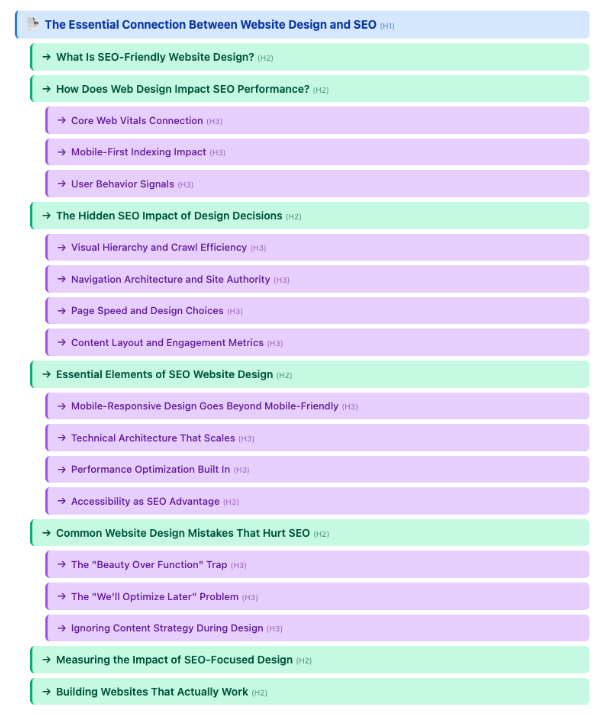
Users scanning your page rely on visual hierarchy to find relevant sections quickly. Screen readers and search engine crawlers use that same structure to navigate and understand your content.
Navigation Architecture and Site Authority
Internal linking distributes both user flow and search engine authority across your site. Clear navigation helps users find what they need quickly while helping search engines understand site structure and page relationships.
Mega menus that try to link everything often overwhelm users and confuse search engines about which pages matter most. Beautiful but buried navigation that hides important content in dropdowns or sub-menus creates pages search engines struggle to find and users never discover. Poor link structures create isolated pages that neither crawlers nor visitors can easily reach.
Design navigation that serves users first, then verify it also serves search engines. When navigation makes intuitive sense to users, it typically works well for SEO. A prospective customer looking for pricing shouldn't need to hunt through multiple dropdowns or guess which menu category contains cost information. Clear, direct pathways to high-priority content help both audiences find what they need. Understanding information architecture principles helps create structures that benefit both audiences.
Page Speed and Design Choices
Every design element carries a performance cost. Strategic design maximizes impact while minimizing that cost.
Design decisions that impact speed:
- Image optimization and format selection
- Font loading strategies
- Animation and interaction libraries
- Third-party scripts and tracking tools
Even minor improvements in loading speed create measurable business impact. A tenth of a second faster can increase conversions significantly. Users expect pages to load in seconds, not minutes, and their patience diminishes with every additional moment of waiting.
Optimize assets during the design phase rather than treating performance as something to fix after launch. When design and development teams collaborate from the start, performance becomes part of design rather than an afterthought.
Content Layout and Engagement Metrics
White space, typography, and content flow impact how long people stay and how deeply they engage. These design decisions create measurable differences in user behavior.
Scannable content with clear headings and short paragraphs leads to longer visits. Users can quickly assess whether your page contains what they need, then dive deeper into relevant sections.
Clear calls to action positioned at natural decision points lower bounce rates. When users understand their next step, they take it rather than leaving.
Logical flow that guides users from awareness to understanding to action generates more page views per session. Each additional page view signals to search engines that your site provides value worth exploring.
All of these behaviors signal quality to search engines. Design creates the conditions where positive engagement happens naturally.
Essential Elements of SEO Website Design
Certain design elements matter more than others when optimizing website design for SEO. Prioritize these foundational decisions.
Mobile-Responsive Design Goes Beyond Mobile-Friendly
Mobile-friendly means your site doesn't break on phones. Mobile-responsive means you've created an optimized experience on every device. Mobile-first means you designed for mobile, then enhanced for desktop.
Search engines use mobile versions for rankings, making your mobile experience the primary version that matters for SEO. Your mobile site doesn't exist as a secondary concern or simplified alternative.
Design considerations for mobile:
- Touch targets large enough (44x44px minimum)
- Text readable without zooming (16px minimum)
- No horizontal scrolling
- Forms that work on phones
Technical Architecture That Scales
Strong design creates foundations that grow with your organization without requiring rebuilds. Your URL structure should make sense to both users and search engines. Clean URLs like yoursite.com/services/web-design communicate hierarchy and content clearly. Generic patterns like /page1 or /node/123 waste an opportunity to help users and search engines understand your site.
Semantic HTML communicates page structure and meaning to search engines. Proper HTML elements tell search engines which content is navigation, which is the main content, which parts are supplementary, and how different sections relate. This helps search engines understand your content hierarchy and relationships.
Some platforms create technical limitations that require expensive workarounds as your needs evolve. Open-source platforms like Drupal provide SEO flexibility that grows with your organization. Real-time SEO optimization in Drupal demonstrates how the right platform supports both current needs and future growth.
Performance Optimization Built In
Speed gets designed from the start rather than added later. Your image strategy should include modern formats with fallbacks like WebP and AVIF. Responsive sizing delivers appropriate image dimensions for different devices rather than serving desktop-sized images to mobile users. Strategic lazy loading delays loading below-the-fold images without creating jarring experiences. Compression maintains visual quality while dramatically reducing file sizes.
Clean, efficient code loads faster and maintains performance as sites grow. This requires collaboration between designers who understand performance constraints and developers who can implement designs efficiently.
Accessibility as SEO Advantage
Accessibility features often improve SEO simultaneously. Alt text serves vision-impaired users who rely on screen readers and search engines that can't see images. Proper heading structure aids both screen readers navigating content and crawlers understanding topic relationships. Keyboard navigation demonstrates code quality to users who can't operate a mouse and algorithms evaluating technical implementation.
Accessible sites serve broader audiences, creating larger potential reach and better business outcomes. Research shows websites implementing accessibility features experience measurable traffic increases alongside improved user experience for people with disabilities.
High quality SEO services treat accessibility as a core component rather than an afterthought.
Common Website Design Mistakes That Hurt SEO
Certain problems appear repeatedly when organizations separate design and SEO work. The symptoms look different across projects, but the root cause stays the same: design teams making decisions without understanding SEO implications, or SEO teams trying to optimize sites built without performance in mind. Recognizing these patterns helps you avoid them.
The "Beauty Over Function" Trap
Image-heavy homepages with minimal text may win design awards but provide little for search engines to understand and rank. Creative navigation that users can't decipher frustrates both humans and crawlers. Fancy animations that tank performance create beautiful experiences nobody stays to see.
The best websites prove beautiful and functional aren't opposing goals. Strategic design creates both aesthetic appeal and technical excellence.
The "We'll Optimize Later" Problem
Treating SEO as something added after design completion means paying twice. Once for the original design work, then again to fix the problems that design created.
Building SEO considerations into design decisions from the start costs less, takes less time, and produces better results than retrofitting optimization into finished designs.
Ignoring Content Strategy During Design
Designing containers before knowing what content they'll hold forces awkward compromises later. Beautiful templates that don't accommodate real content create friction. Fixed layouts that can't adapt to different content types limit what you can publish.
Content strategy and information architecture should inform design decisions. When you know what you're saying and to whom, design becomes clearer. The structure emerges from the content rather than forcing content into predetermined boxes.
Measuring the Impact of SEO-Focused Design
Success requires tracking metrics that matter for both user experience and search performance:
- Organic traffic growth from qualified searches
- User engagement improvements (time on site, pages per session, return visits)
- Conversion rate increases (leads, downloads, applications, purchases)
- Technical performance scores (Core Web Vitals, page speed)
Some improvements show results immediately. Technical fixes, speed improvements, and error corrections can impact search performance within days. Others take months as search engines re-crawl and re-evaluate your site based on accumulated user behavior data.
Organic visibility typically improves gradually over three to six months as the compounding benefits of good design and SEO accumulate. Search engines need time to discover changes, observe user responses, and adjust rankings accordingly.
SEO-optimized design creates a foundation rather than a finish line. Markets evolve, competitors adapt, and search algorithms change. The best approach treats websites as platforms for ongoing optimization rather than static deliverables. Modern approaches to AI and SEO demonstrate how the field continues evolving.
Building Websites That Actually Work
Website design and SEO serve the same goal: creating exceptional user experiences that drive business results. Treating them as competing priorities wastes resources and produces compromised outcomes.
Planning a website project means involving both design and SEO expertise from discovery, not just during development. Choose partners who integrate these disciplines naturally rather than managing them as separate workstreams. Build for continuous improvement rather than viewing launch as completion.
The most successful websites emerge from collaboration between designers who understand technical constraints and SEO specialists who appreciate design goals. When these disciplines work together from the start, you avoid expensive retrofitting that comes from treating them as separate concerns.
Strategic design decisions create websites that users enjoy and search engines reward. Every choice about layout, navigation, performance, and accessibility affects both how people experience your site and how search engines evaluate and rank it.
Ready to build a website that performs? Explore our design services that integrate SEO from the start, or contact us to discuss how strategic design can drive both search visibility and business growth.
Contributors