
Why Choose Drupal? 10 Benefits for Your Website

Choosing a content management system commits you for years, through every redesign, integration, and compliance request between now and the next replatform.
So why choose Drupal over the alternatives? For some organizations the benefits of Drupal are decisive, and for others they're beside the point. The difference lies in how much structure, scale, and compliance your website has to carry.
This guide covers ten benefits, comparisons with WordPress and the enterprise suites, results from projects we've delivered, and the cases where we'd recommend a different platform.
What Is Drupal?
Drupal is an open-source content management system (CMS), the software behind your website's pages, menus, media, and editing tools. It's built for organizations with structured, high-volume content and many hands on the site, which is why universities, governments, and global nonprofits run it.
The platform comes in two packages in 2026. Drupal core, at version 11, is the foundation development teams build on, while Drupal CMS wraps the same engine in ready-made features for marketers and site builders.
Who Uses Drupal in 2026?
Seventy percent of the world's leading universities run on Drupal, backed by a contributor community of more than 35,000 developers. The platform's public case studies include the United Nations, Harvard University Library, and a long list of Fortune 500 companies.
Drupal powers under one percent of all websites, and it ranks second behind WordPress across the 100,000 highest-traffic sites. Lighter tools serve the simple end of the web, while high-traffic organizations with complex content concentrate on Drupal.
10 Benefits of Drupal for Your Website
The ten benefits below run from budget questions to daily operations. The first three (cost, security, and scale) decide whether Drupal makes a shortlist.
The middle six shape the working lives of editors, translators, and IT teams, and the last one covers where Drupal is headed.
1. Open-Source Freedom Without Licence Fees
Drupal's code is free to use, modify, and keep. There's no per-seat pricing or per-site licence, and no vendor holds the power to raise your rates at renewal or retire the product underneath you. If you change agencies or hosts, the code and every customization you've paid for come with you.
A free licence doesn't add up to a free website. Design, development, and hosting cost money on any platform. What open source removes is the licence line itself, which can dwarf the rest. One organization came to us from a proprietary system where licensing alone ran $300,000 a year.
2. Enterprise-Grade Security
Security is the opening question from public institutions, because open code sounds exposed. In practice, thousands of developers examine Drupal's code, every reported vulnerability goes through a dedicated security team with more than 15 years of advisories behind it, and patches land on a published release calendar your IT department can plan around.
The same depth extends to permissions. Roles control who can create, edit, publish, or delete each content type, and security reviews ask for this level of control by name.
3. Scalability for High-Traffic, Content-Heavy Sites
Institutional traffic arrives in spikes, and an enrollment deadline or a funding announcement can multiply your visitors in an afternoon. Drupal ships with layered caching serving repeat requests from memory instead of rebuilding each page, which is how the platform carries sites with millions of monthly page views.
4. Flexible, Structured Content Modelling
Where simpler platforms store everything as a page or a post, Drupal lets you define content types with their own fields, templates, and rules.
Programs, events, people, courses, and locations become structured data you can display, filter, and reuse across the site, and editors stop copying and pasting the same information between pages.
Stanislaus State publishes STAN Magazine, a digital publication with a design of its own, inside the university's existing Drupal site rather than as a separate build.
5. Multisite Management From One Codebase
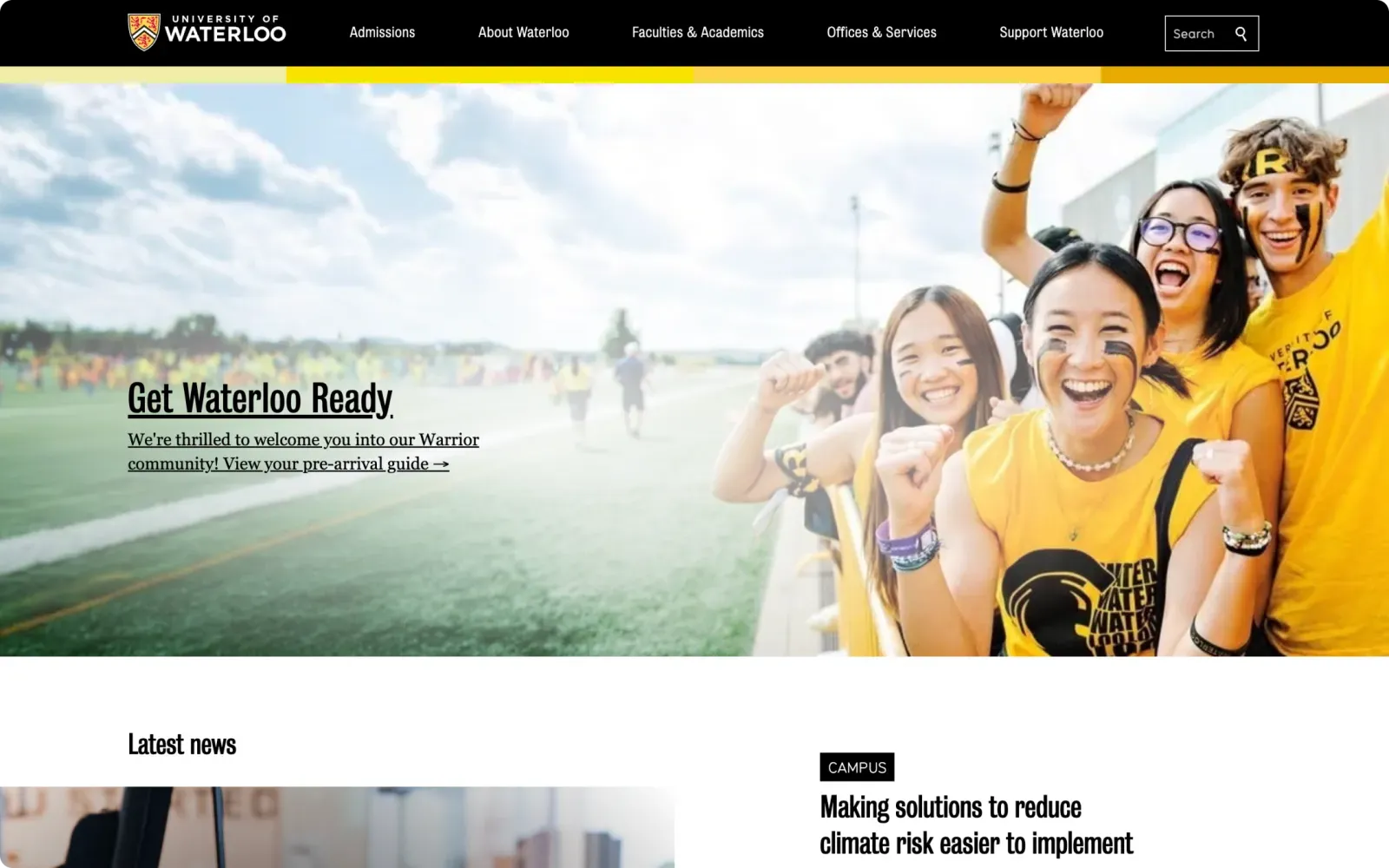
An organization running dozens of sites for faculties, campaigns, regional chapters, or sub-brands can serve all of them from one Drupal codebase, with shared design systems, central updates, and room for each site's own content. The University of Waterloo runs 1,100 websites on one Drupal platform serving seven million page views a month, and its central teams update every site in one pass.
6. Built-In Accessibility Standards
Accessibility is law for universities, governments, and many nonprofits. The benchmark is the Web Content Accessibility Guidelines (WCAG), the standard auditors and regulators use to judge whether people with disabilities can use your site, and it's the requirement teams underestimate until an audit lands.
Drupal core targets WCAG 2.2 Level AA across both public pages and the admin interface, so accessible output is the default instead of a retrofit.
7. Multilingual Support
Language handling lives in Drupal core, not in paid add-ons. Interface, content, and configuration each translate, and editors manage translations inside the same workflows they use for the rest of the site. Canadian institutions with bilingual mandates get this on day one, where other platforms sell it back as an upgrade.
8. Integration With Your Existing Tools
Your website shares data with a customer relationship management (CRM) system, marketing automation, event tools, and site search.
Drupal connects to each of them through application programming interfaces (APIs), the standard way software systems exchange data, plus contributed modules maintained by the community.
Rather than replacing the tools your teams rely on, Drupal acts as the content hub between them, and Salesforce, Marketo, and donation platforms are common pairings in our projects.
9. A Large, Active Open-Source Community
Tens of thousands of contributors maintain Drupal's module library, with thousands of tested extensions covering features you'd otherwise build from scratch. Check the library before budgeting custom development, since common requests like event calendars and CRM connectors ship as maintained modules. And because no single company owns the roadmap, the platform can't vanish behind an acquisition or a licensing change.
10. Predictable Upgrades and Continuous Innovation
Since Drupal 8 the platform upgrades in place, so the move from 9 to 10 to 11 is a task your team schedules rather than a project you budget a year for.
Development sped up once the upgrades calmed down. Drupal CMS, released in January 2025, packages the platform with ready-made features for marketing teams without a developer on staff, and version 2.0 is current in 2026.
Artificial intelligence (AI) tooling follows the same open-source pattern, with editors reviewing and approving AI-driven changes before anything is published. Drupal's 2026 roadmap pairs AI-assisted prototyping with the structured content model from benefit four.
Why Drupal Is Better Than Other CMS Platforms
Drupal's advantages over other platforms come down to structure, permissions, scale, and ownership. The first three separate it from WordPress, while ownership is the argument against the enterprise suites.
Drupal vs. WordPress
WordPress runs a huge share of the web for good reason, since it's fast to launch, easy to staff, and friendly to small teams. A marketing site with straightforward content will cost less to build and run on WordPress.
Drupal pulls ahead once structure, permissions, and scale become requirements.
Choose WordPress when | Choose Drupal when |
|---|---|
One team manages a marketing site | Hundreds of editors need different permissions |
Content fits pages and posts | Programs, people, events, and courses need structure |
Speed to launch outweighs governance | Compliance, security review, and audits are routine |
Plugins cover your feature list | Custom integrations and multisite are on the roadmap |
Drupal vs. Proprietary Platforms
Against Adobe Experience Manager, Sitecore, and similar enterprise suites, Drupal competes on capability and wins on ownership.
Licence fees on proprietary suites run five to six figures a year, renewal pricing favours the vendor because the switching costs sit with you, and leaving means abandoning the platform along with your investment in it.
With Drupal you own the code, and the $300,000 licensing bill from benefit one becomes a development budget.
How Organizations Use Drupal
Our Drupal practice centres on higher education, government, and nonprofit organizations. Each example below links to its full case study.
Higher Education
Ashland University replatformed from Drupal 7 and rebuilt its site around prospective students. After launch, organic search traffic grew 230%, referral traffic grew 282%, and engaged sessions per user rose 16%.
Universities choose the platform for three of the benefits above: multisite for faculties and departments, accessibility compliance, and permissions built for hundreds of editors.

Government
The Federation of Canadian Municipalities modernized two national sites on Drupal, with flexible page building and dashboards its team updates without developer time. Bilingual delivery and years of accumulated content shaped the build, both requirements Drupal covers in core, without custom code.
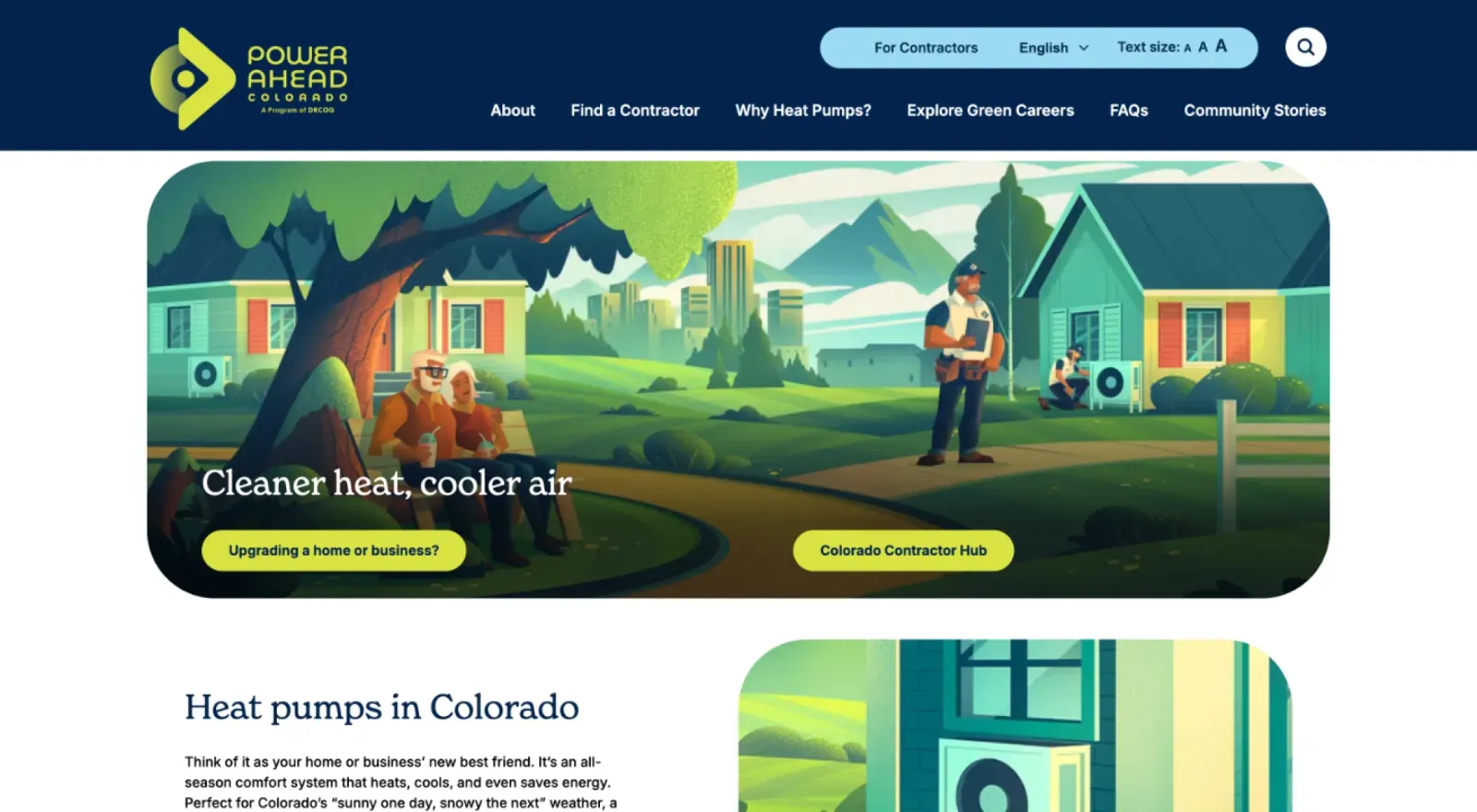
Power Ahead Colorado, a regional energy program by the Denver Regional Council of Governments, launched its custom Drupal site on schedule with a searchable contractor directory built in.
Nonprofits
Teach For All serves a network spanning 62 countries from a shared Drupal framework, giving each partner organization its own site without 62 separate builds. Mennonite Central Committee runs two Drupal sites on one design system with faceted search across programs, a build recognized with an AVA Digital gold award. For organizations where every dollar is scrutinized, the missing licence line changes what the web budget buys.
When Drupal Might Not Be the Right Fit
In three situations we end up recommending a different platform.
- Your site is small and stable: A five-page presence with light updates doesn't need Drupal's machinery, and a simpler platform will cost less at every step.
- Nobody owns the site after launch: Skipped updates accumulate security risk on every platform, and Drupal needs a maintenance plan or a partner behind it.
- Your budget covers templates, not development: Drupal's strengths come from tailoring, so if tailoring isn't in the budget, you'd be buying a platform you can't use.
Editors find Drupal's admin approachable after a short ramp-up, but building and maintaining the platform is developer work, and the budget has to include it. Before you commit in either direction, spend an hour counting the full cost of an enterprise website.
How to Choose a Drupal Partner
If Drupal makes your shortlist, the partner you build with shapes the outcome as much as the platform does. Contributions to the Drupal project are public record, so look up a prospective partner's profile on drupal.org before their portfolio. Sector experience counts because compliance rules differ, and a partner who has passed security reviews in your sector will know what yours requires. Ask about year two before you sign, because the launch team disperses while the site needs patches, upgrades, and support for years.
Questions to Ask Before You Commit
- Have you migrated sites for organizations like ours, and can we speak with them?
- Who maintains the site after launch, and at what cost?
- How do you test accessibility, and against which standard?
- What does year two look like in hours and dollars?
How much of your code is contributed back to the Drupal community?
Common Questions About Drupal
The same three questions come up in Drupal searches, and the last two trace back to the Drupal 7 era.
What Are the Benefits of Using Drupal for Web Development?
For development teams, the case rests on the foundations. Drupal 11 runs on modern PHP and Symfony components, configuration lives in version control, and a built-in Migrate API moves content in from older systems. An API-first design means Drupal can feed content to mobile apps, kiosks, and front ends beyond the website itself.
Is Drupal Hard to Learn?
For content editors, no. The admin interface takes days to learn, and Drupal CMS ships with ready-made features for marketing teams, so publishing starts without a developer in the loop. Building and maintaining the platform is the demanding side, and it takes experienced Drupal developers, which is why the partner questions above exist.
Is Drupal Still Relevant in 2026?
Yes. Drupal sits second among the web's highest-traffic sites, shipped Drupal CMS for marketing teams in January 2025, and published a 2026 roadmap centred on AI tooling and performance gains.
Getting Started With Drupal
Choose Drupal when content complexity, compliance, and scale are the problems you're solving, and skip it when they aren't. Talk with our team about your requirements and we'll tell you whether Drupal fits them, including when the answer is no.